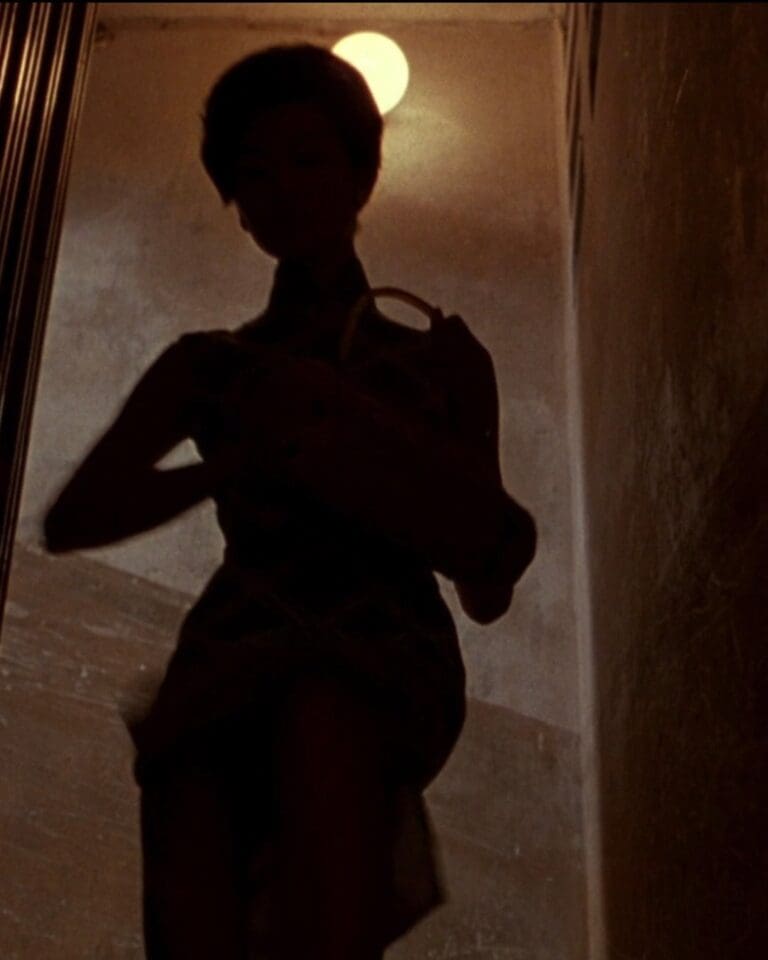
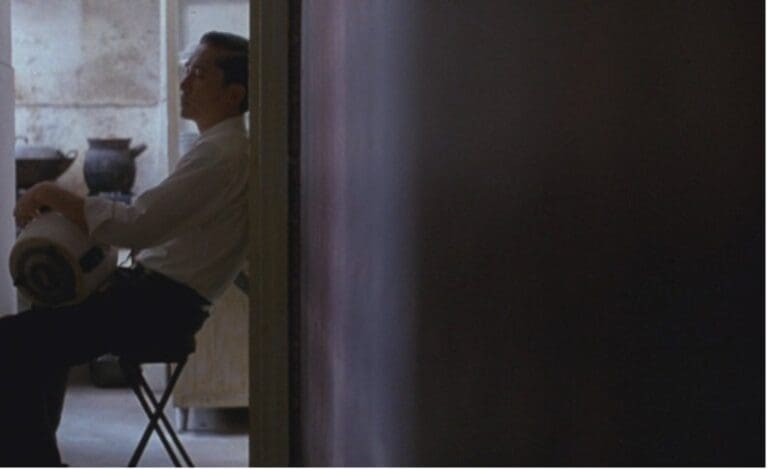
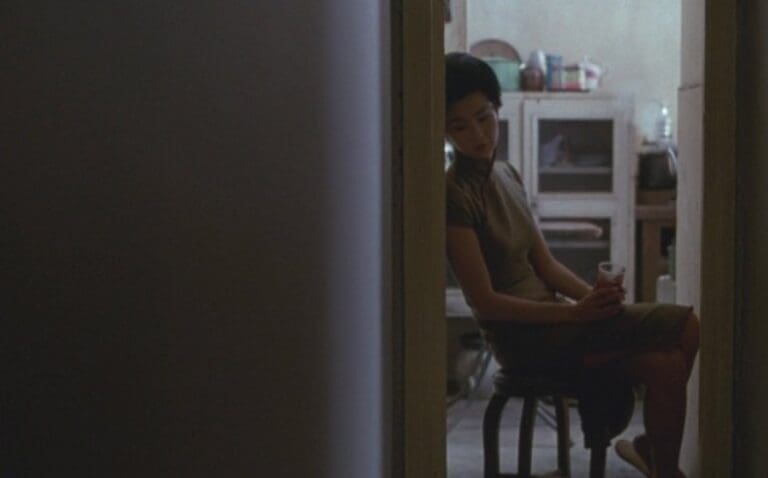
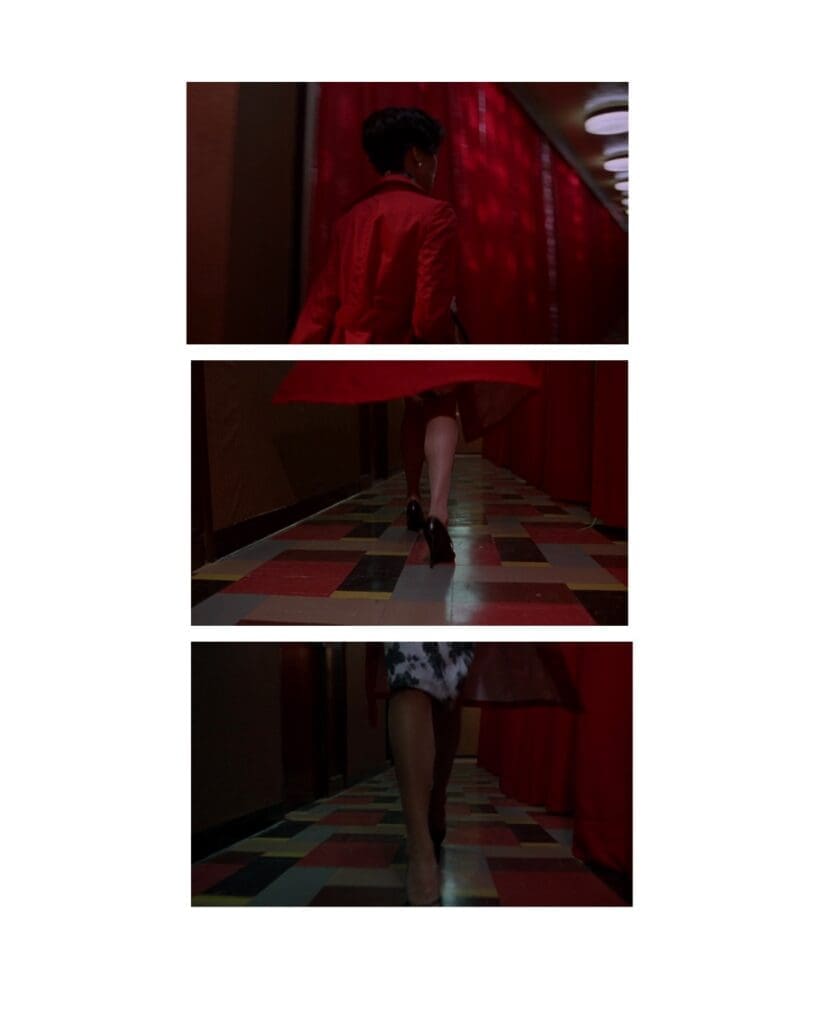
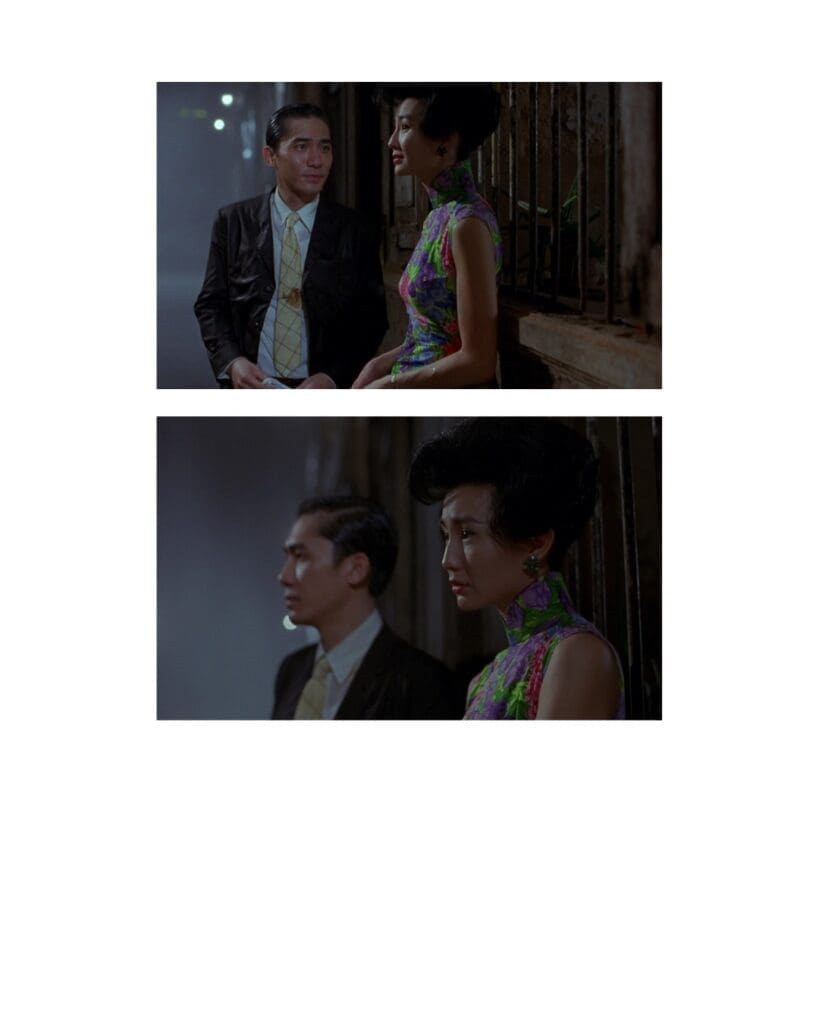
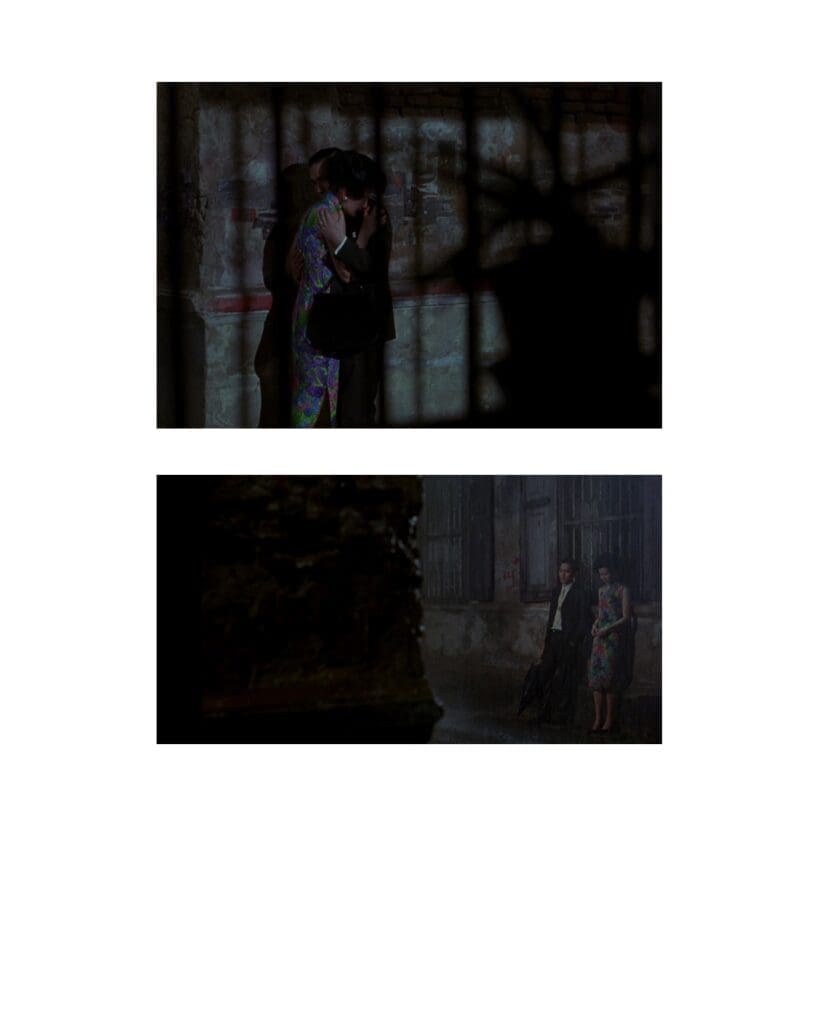
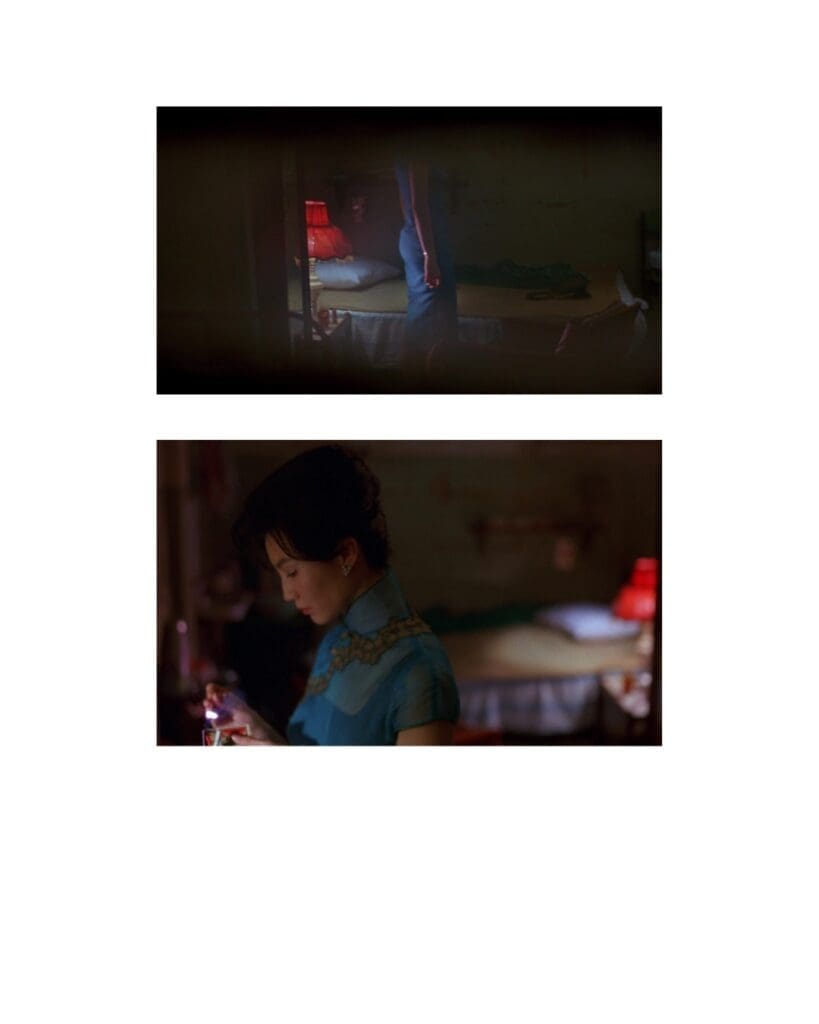
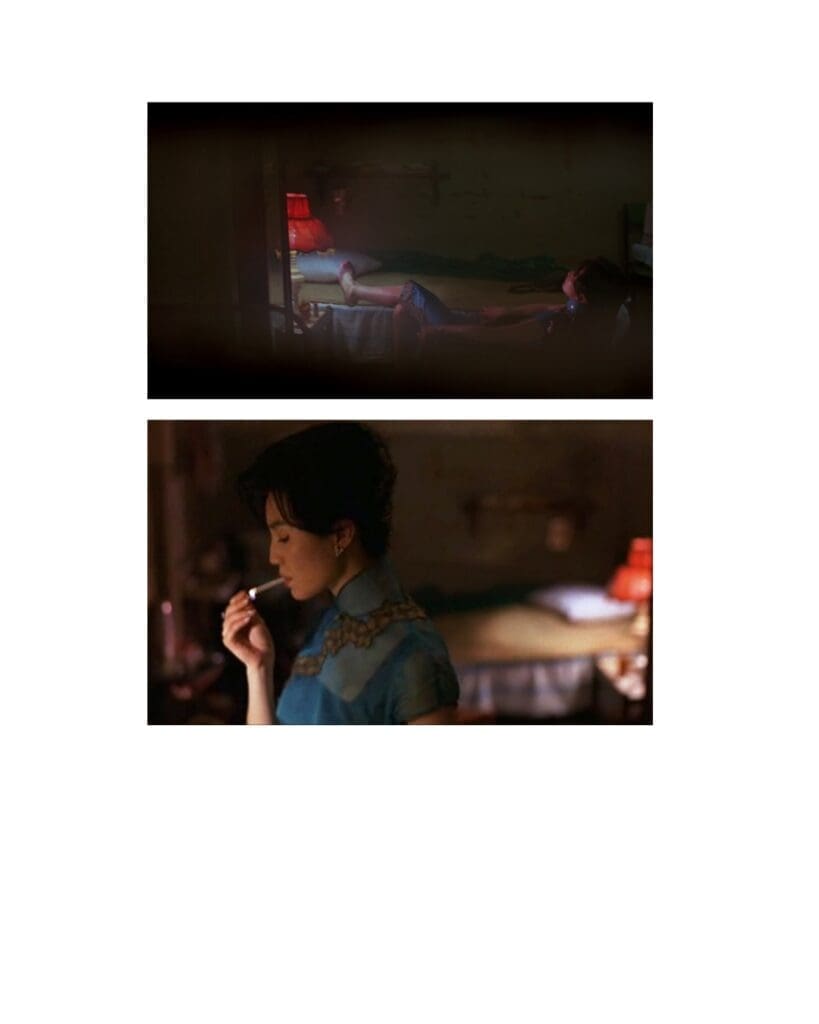
In the Mood for Love is not merely a film. It’s a masterclass in cinematic restraint, where every element, from the cut of a dress to the flicker of a hallway lamp, speaks volumes about desire, dignity, and denial.
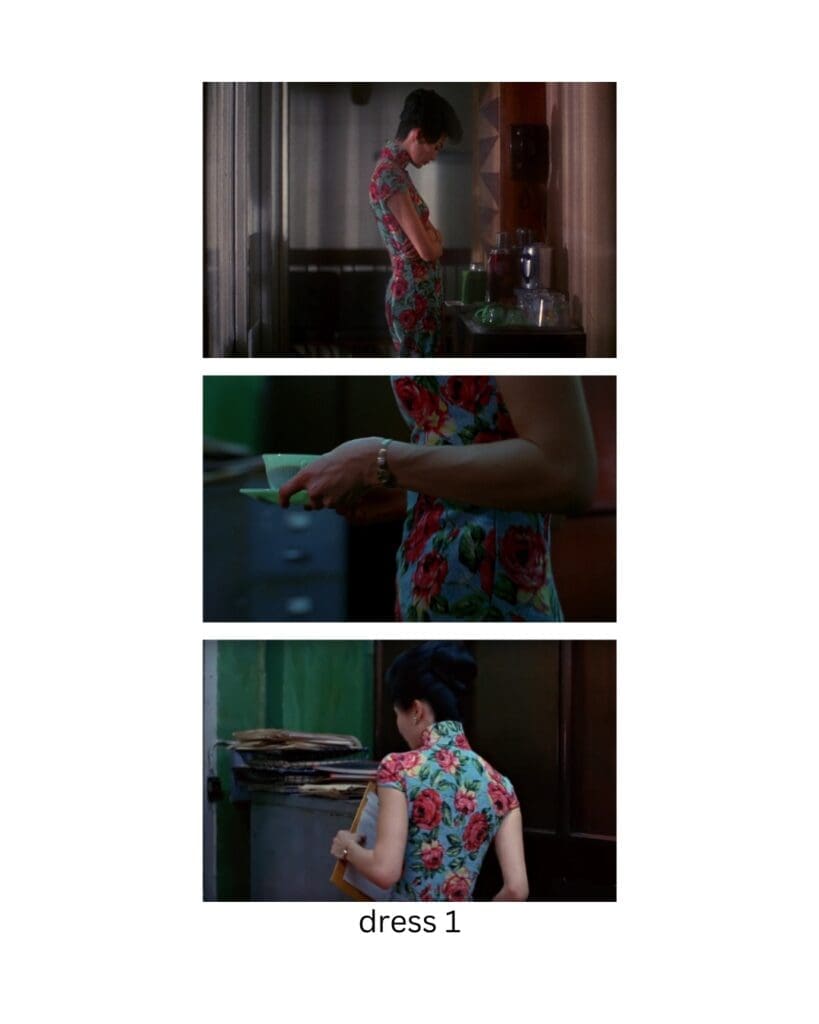
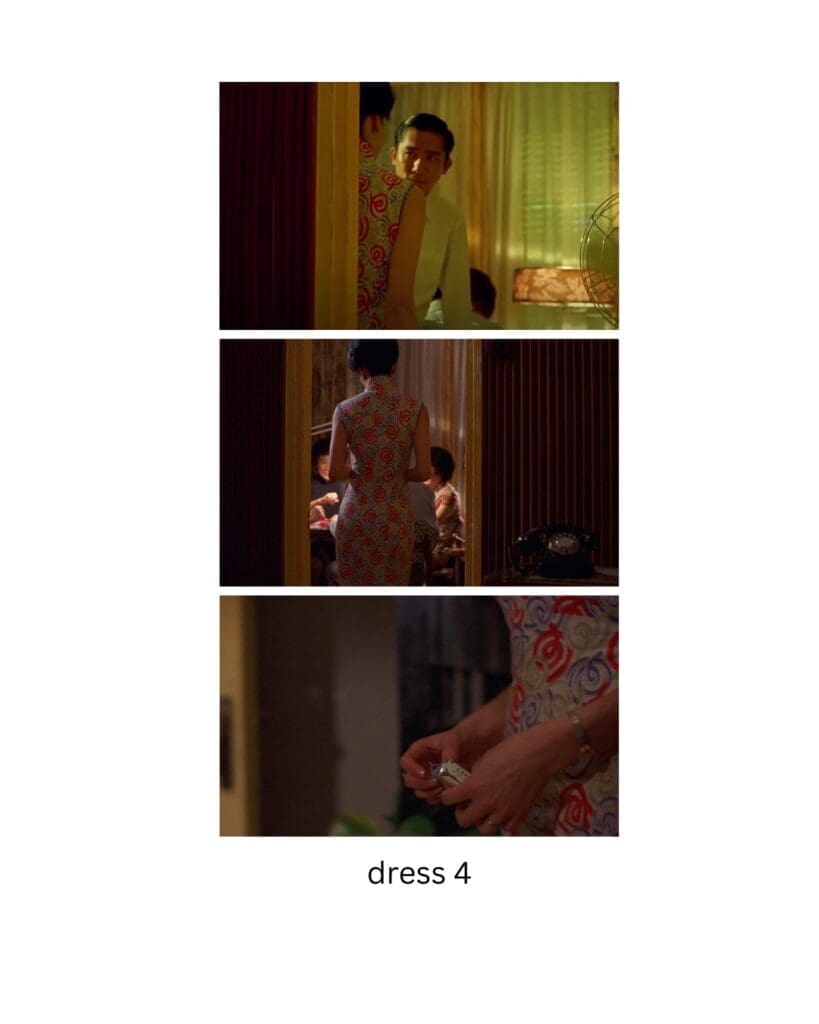
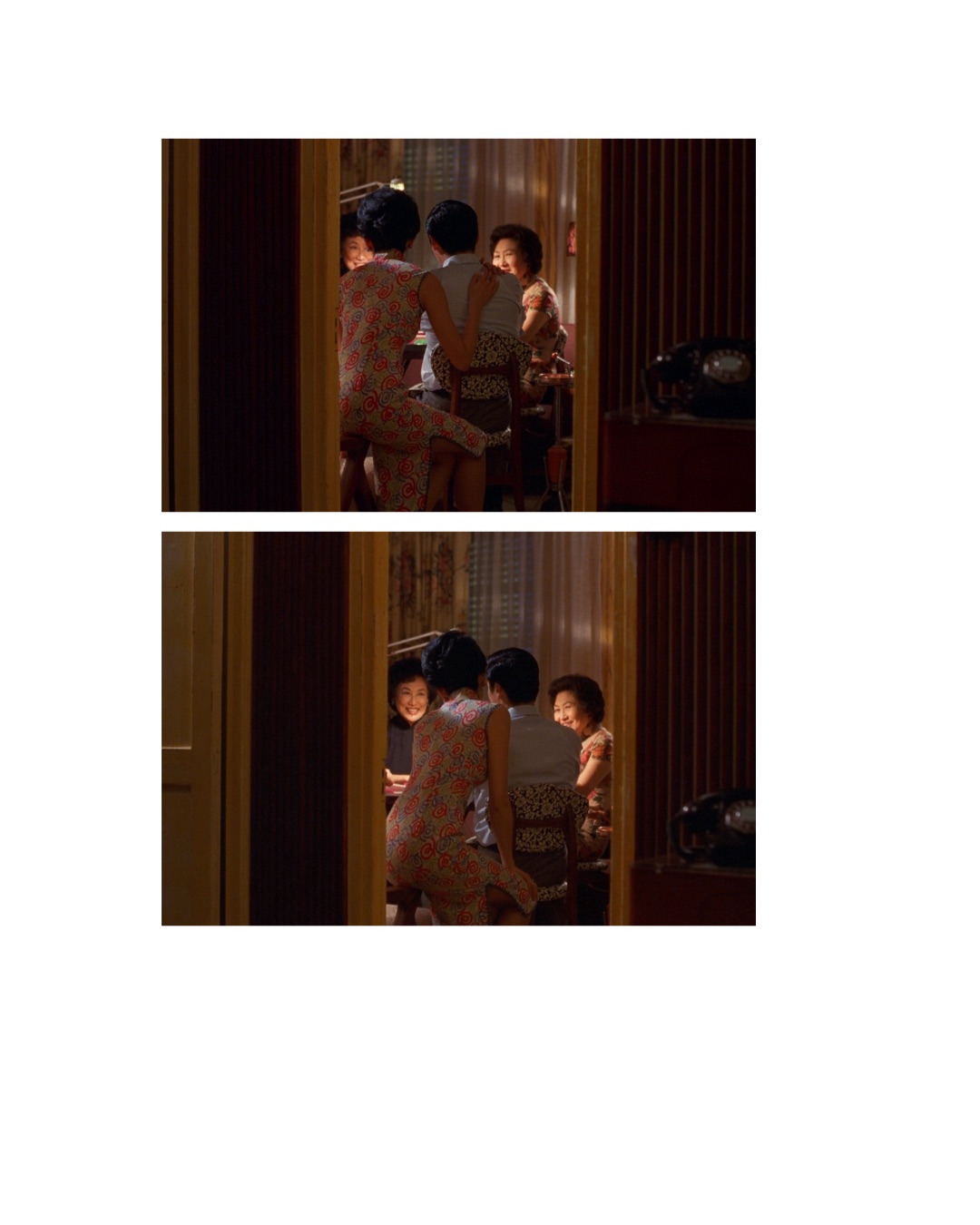
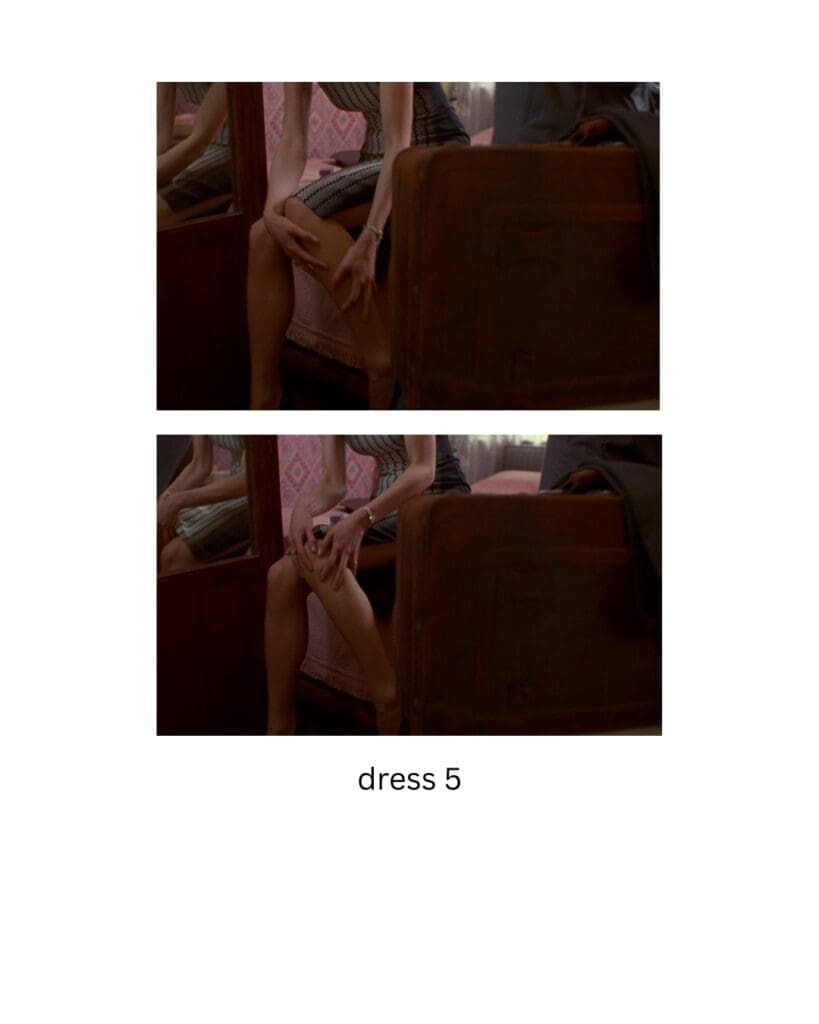
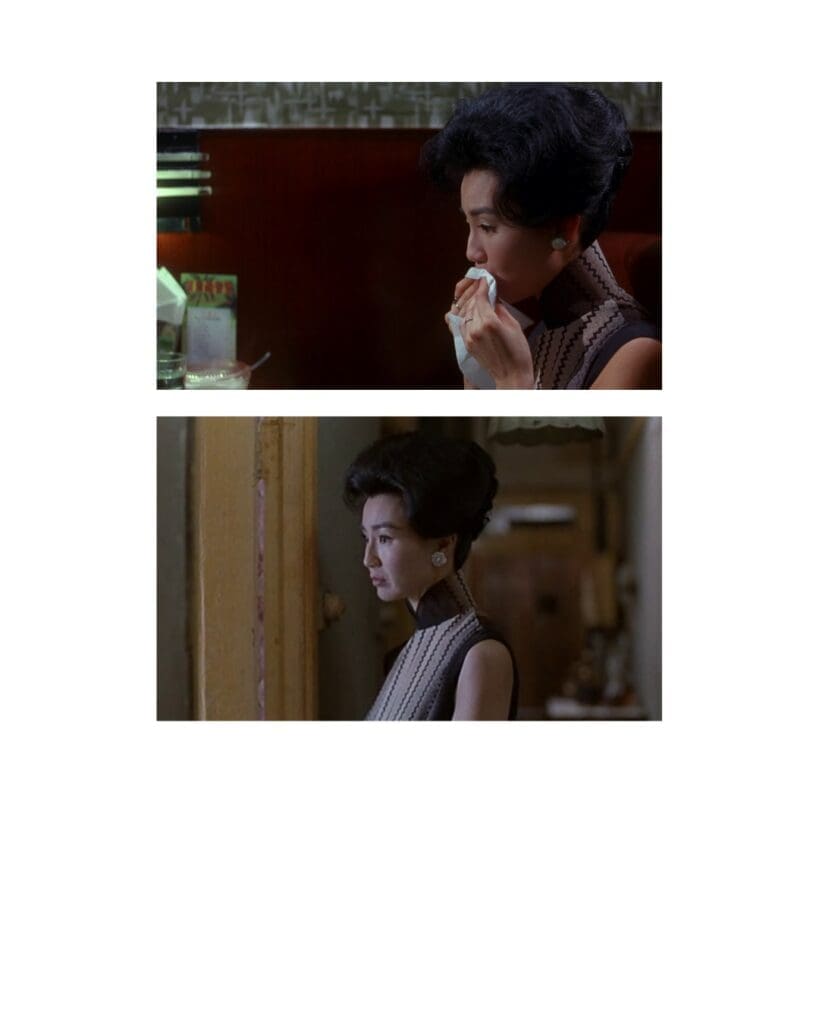
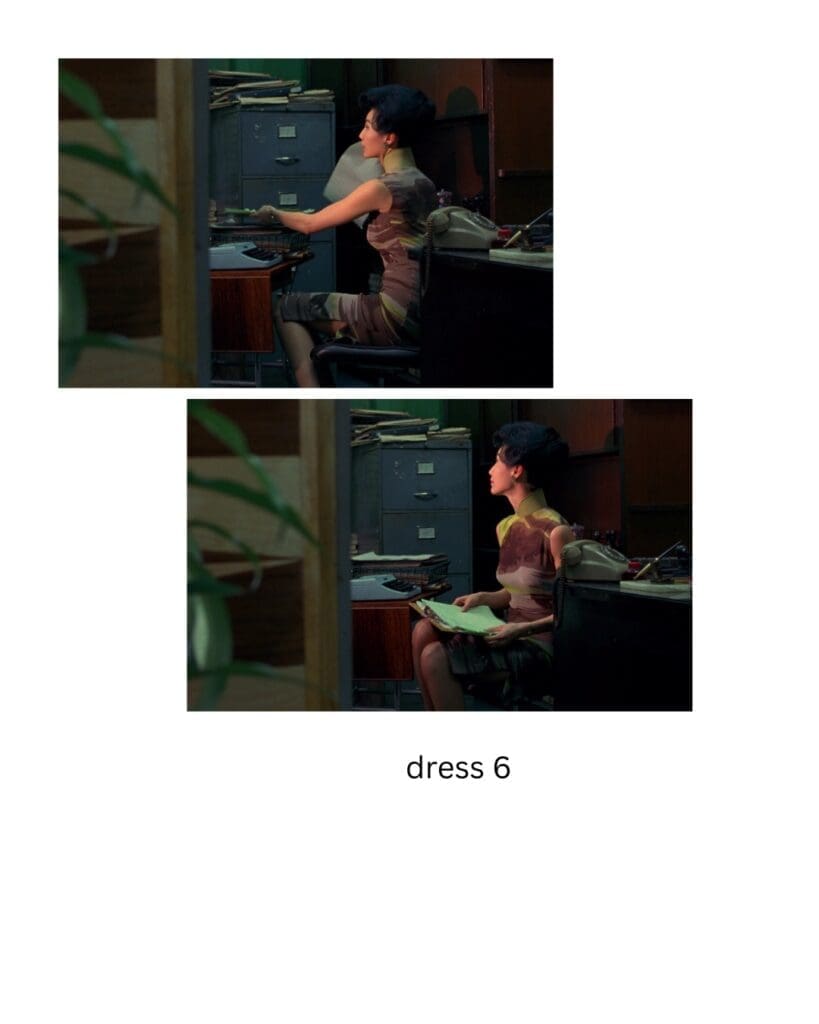
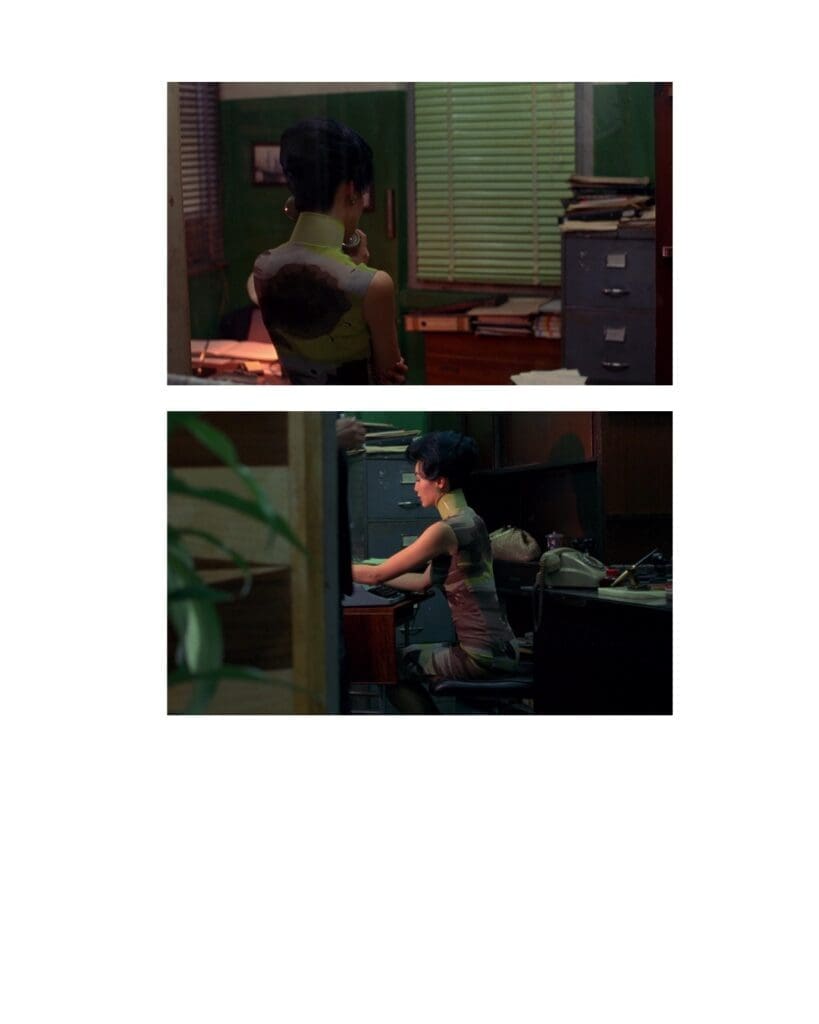
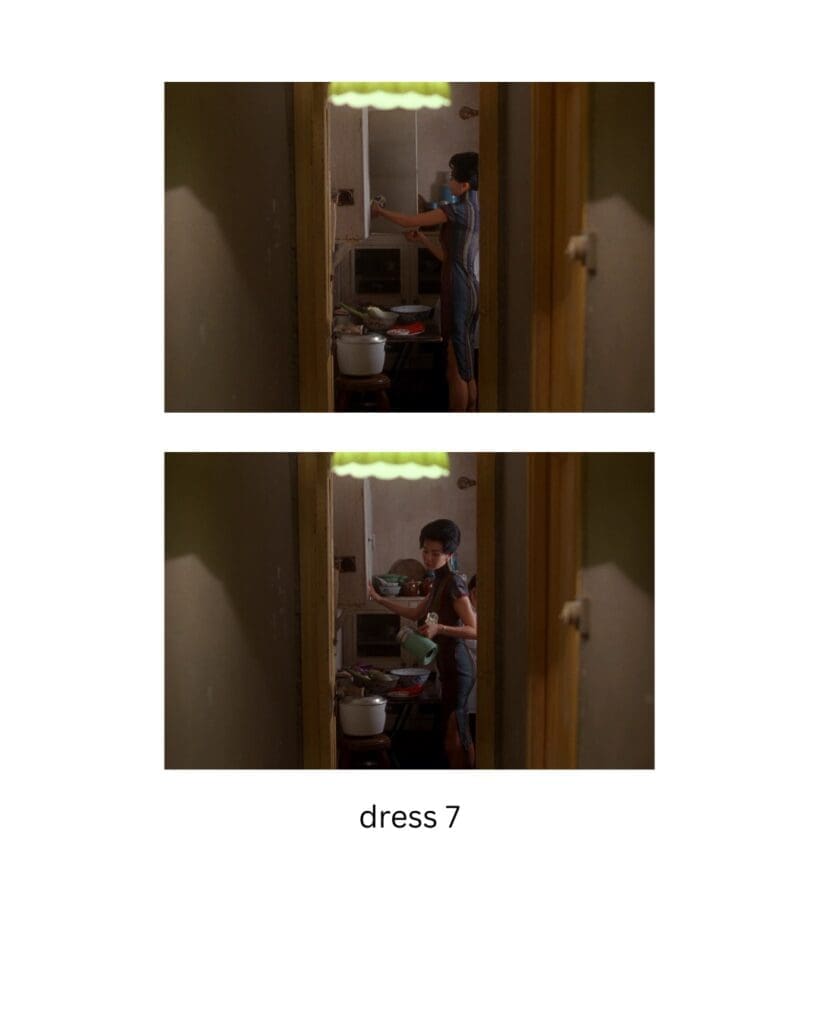
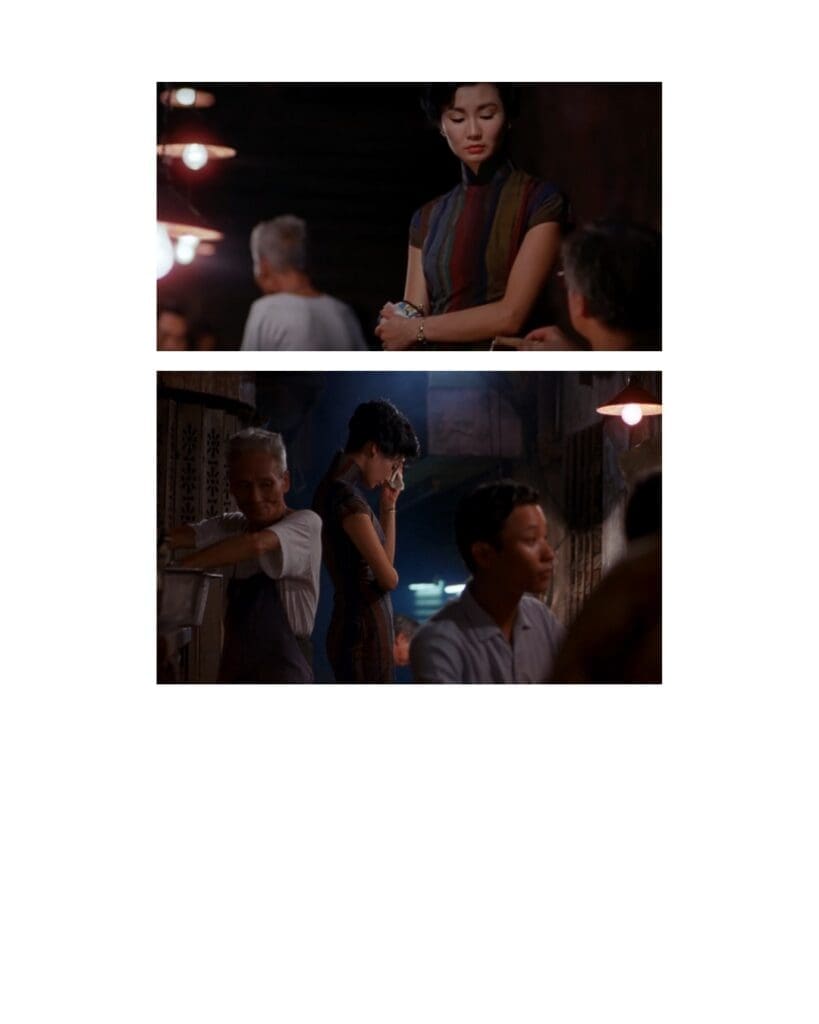
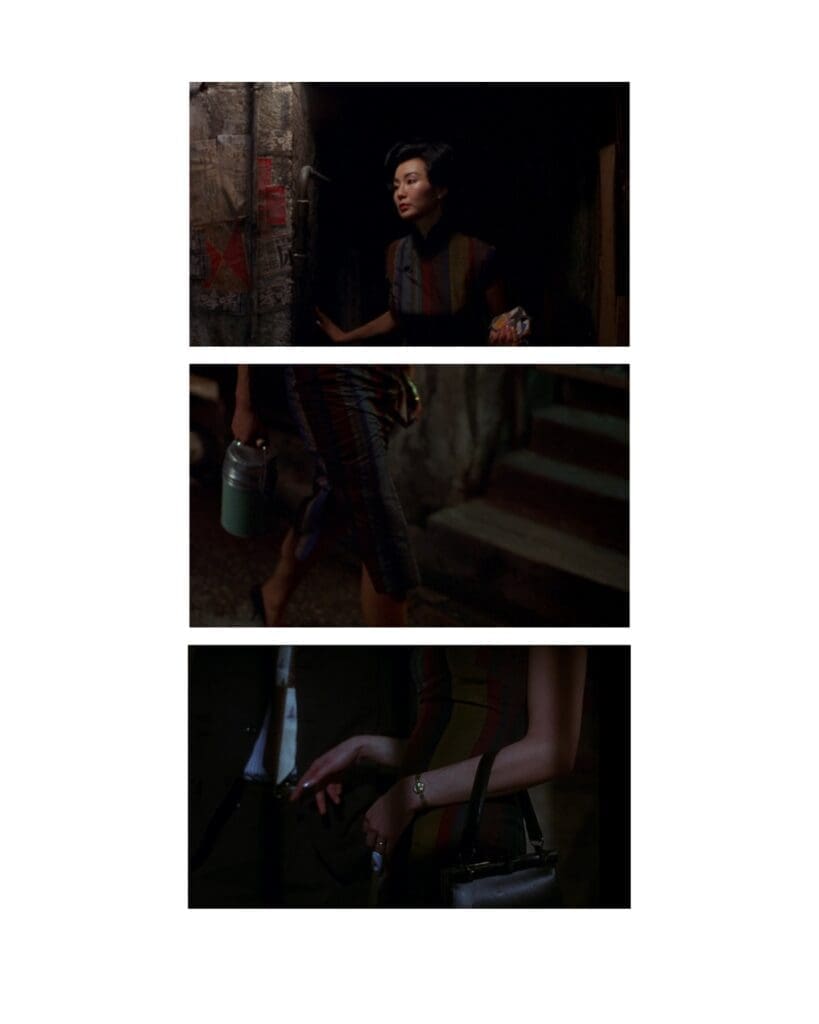
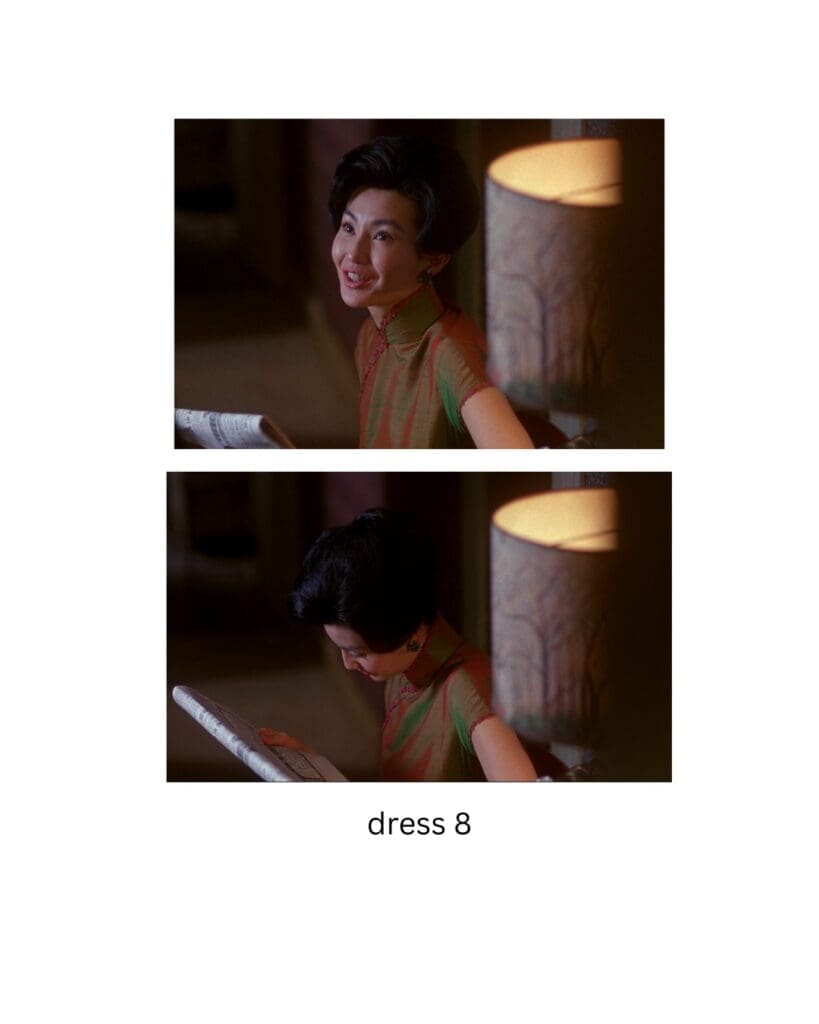
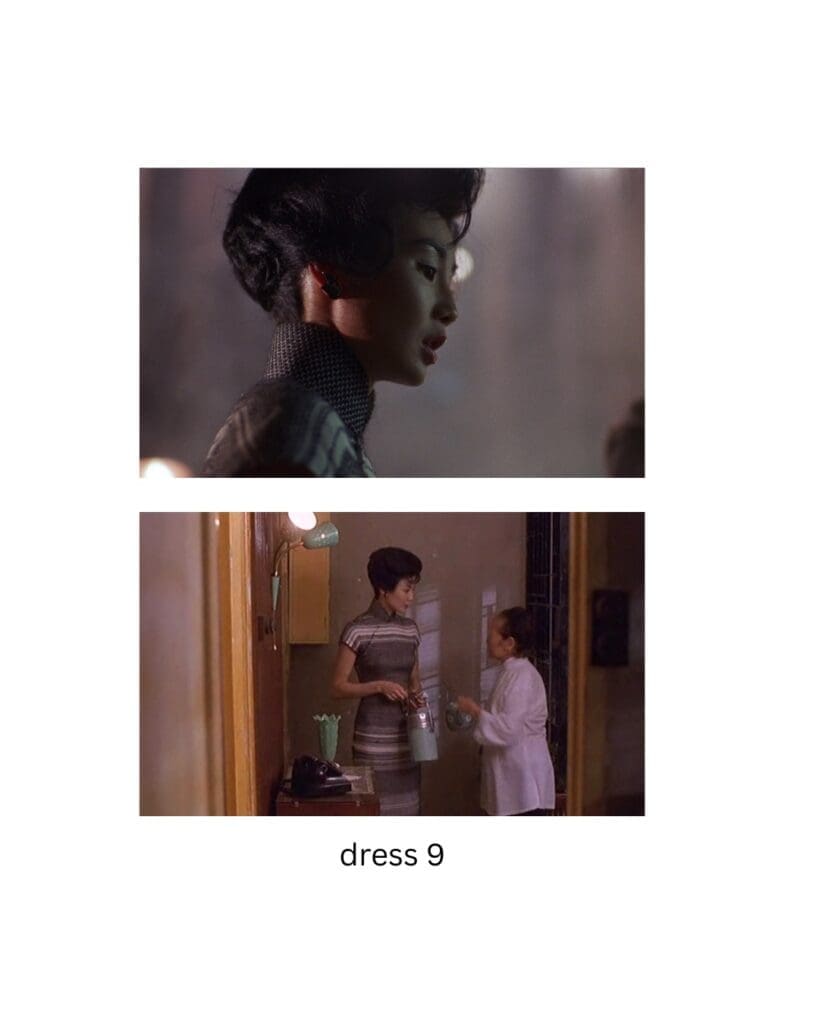
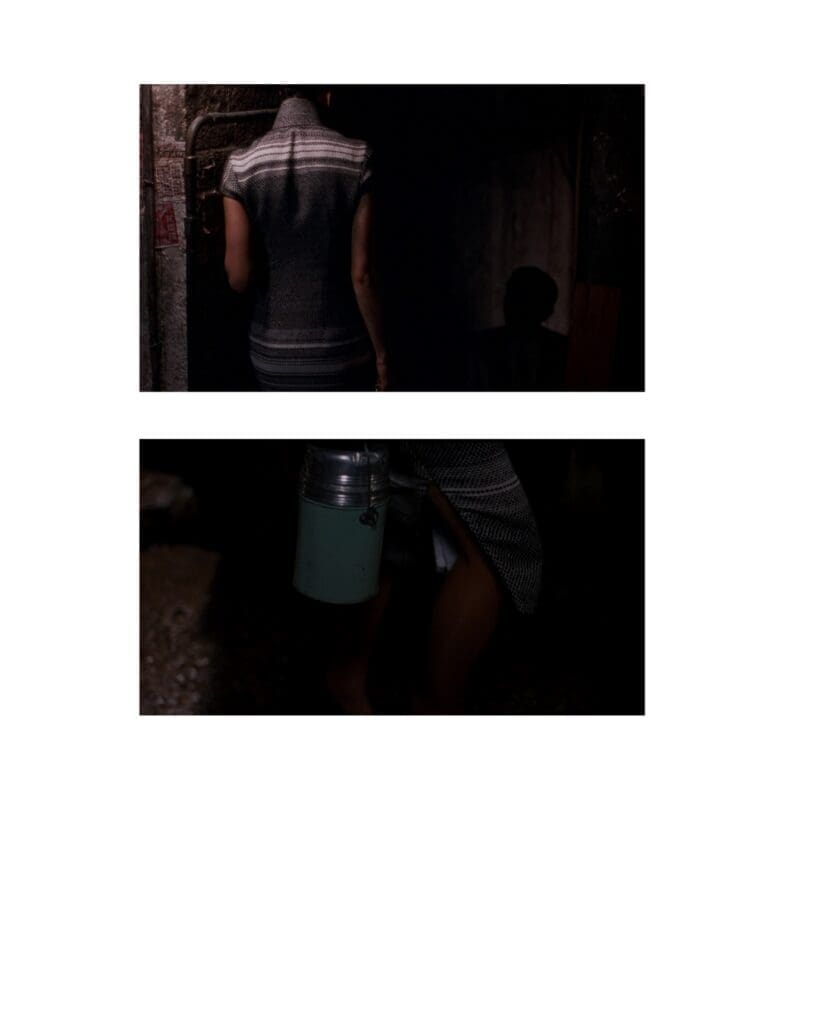
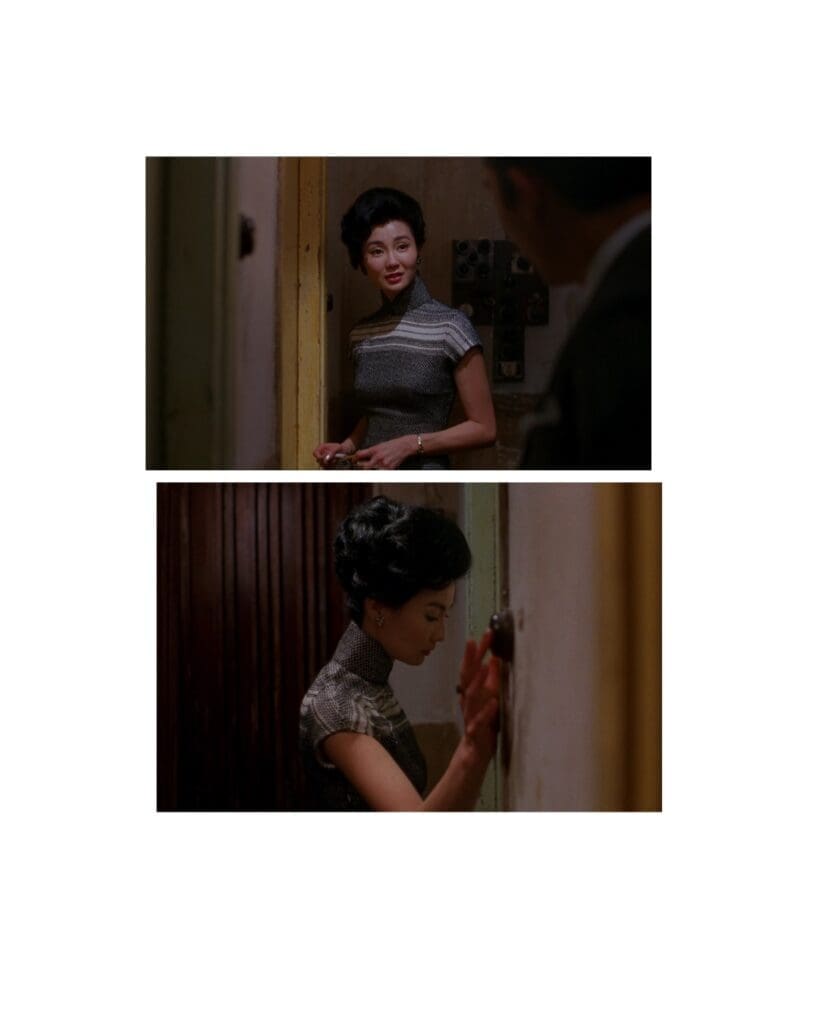
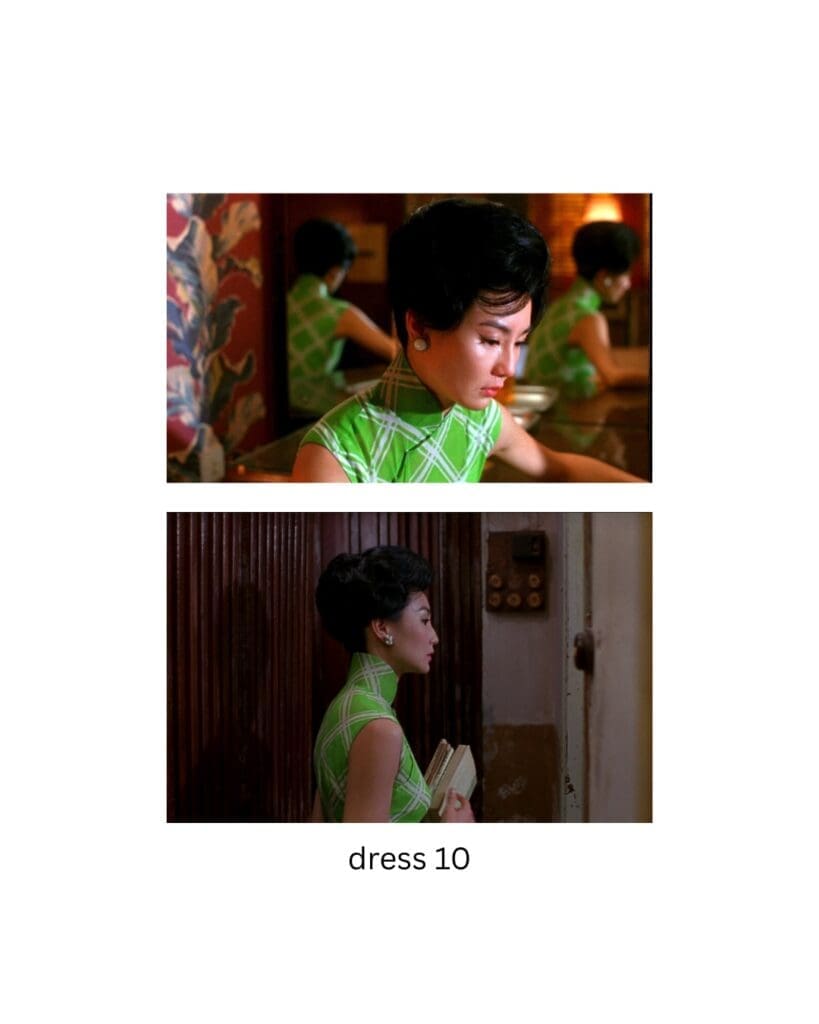
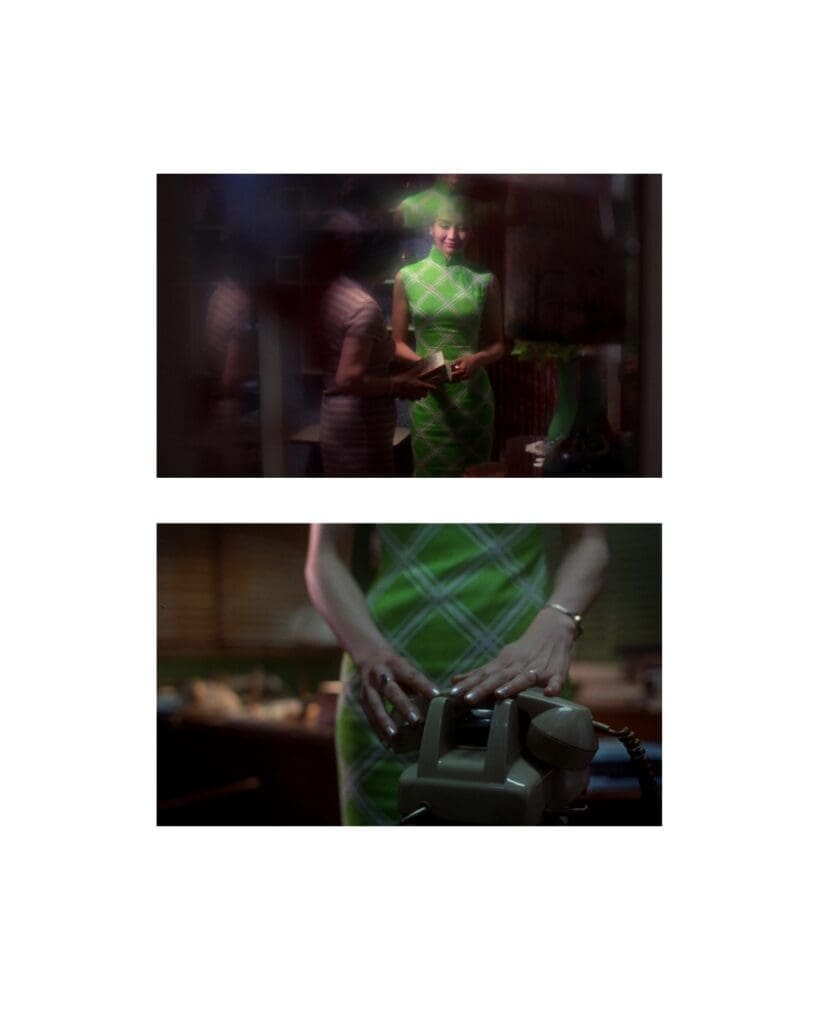
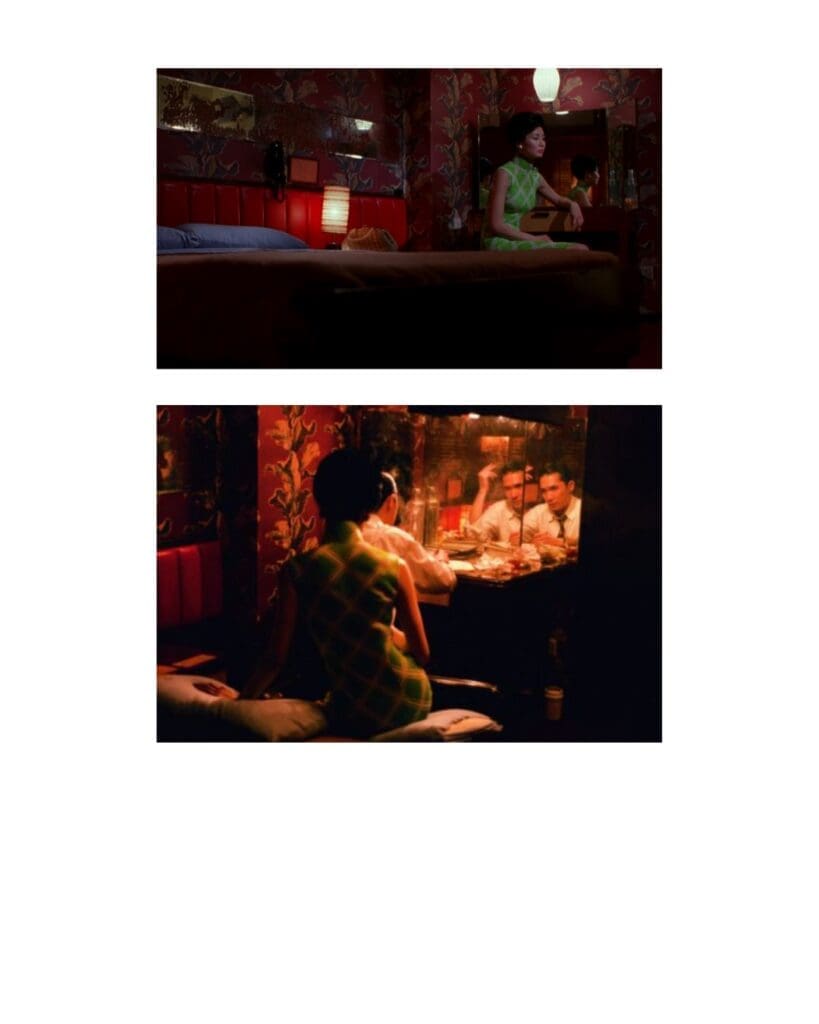
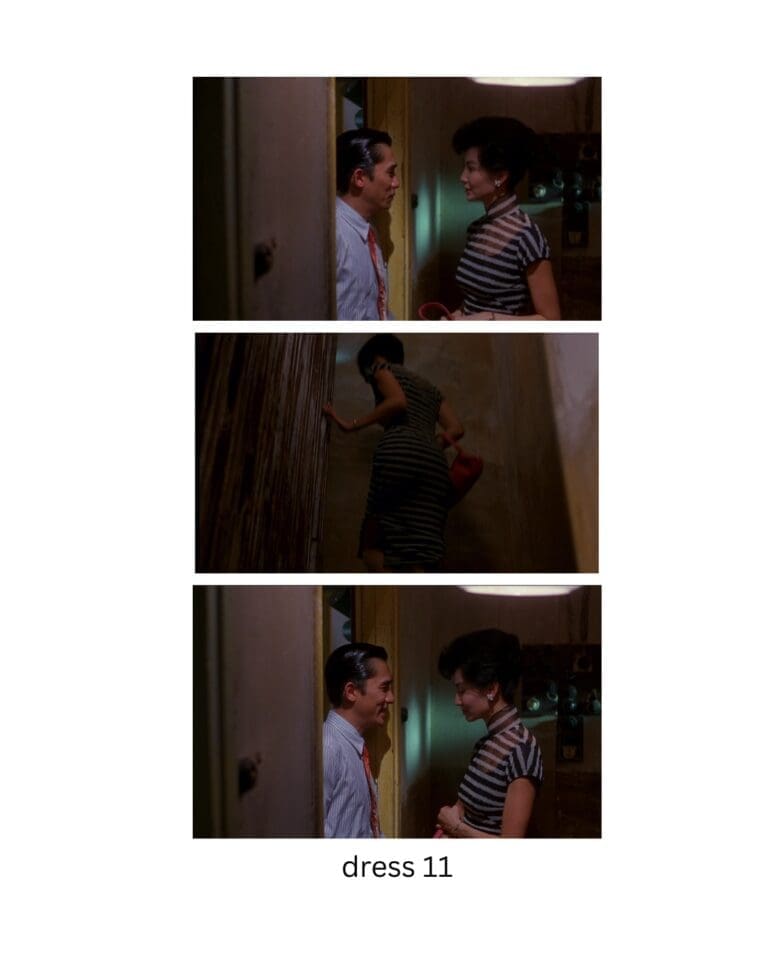
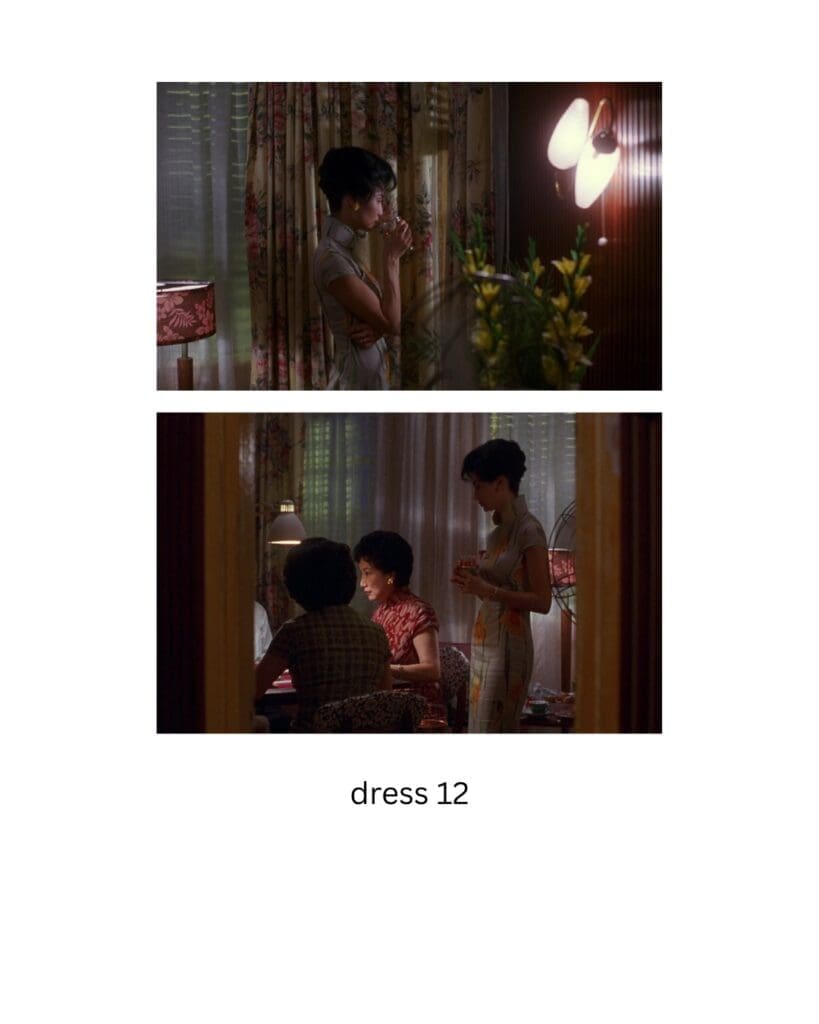
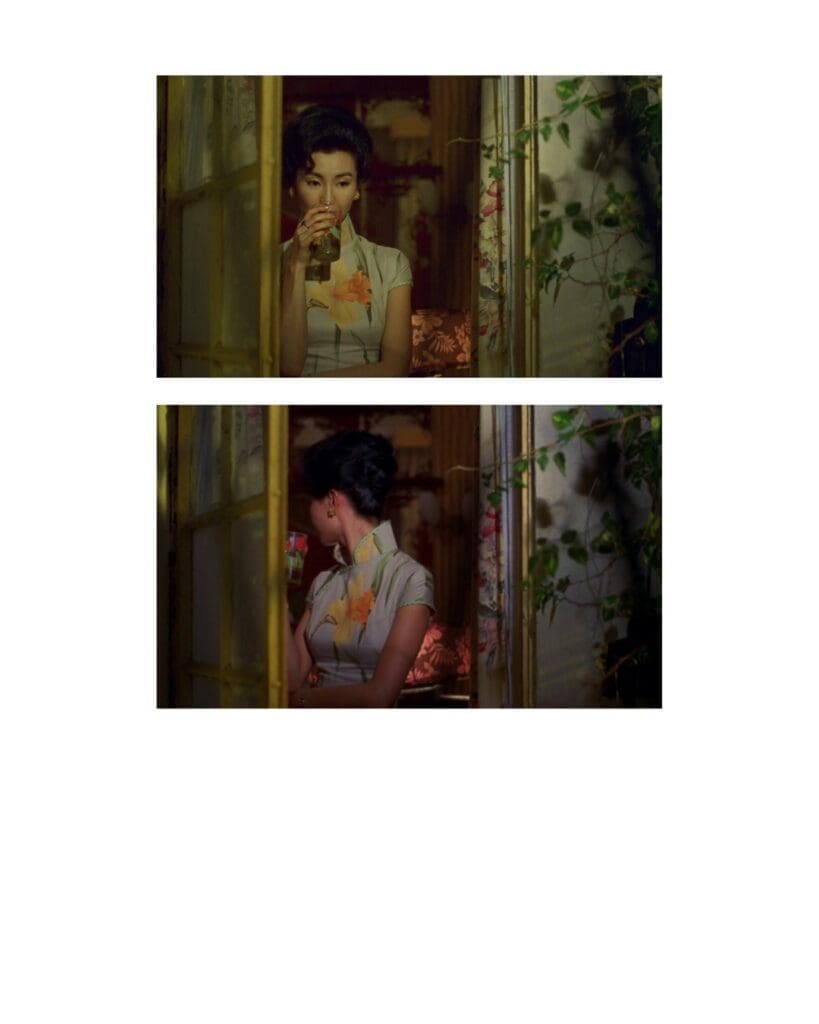
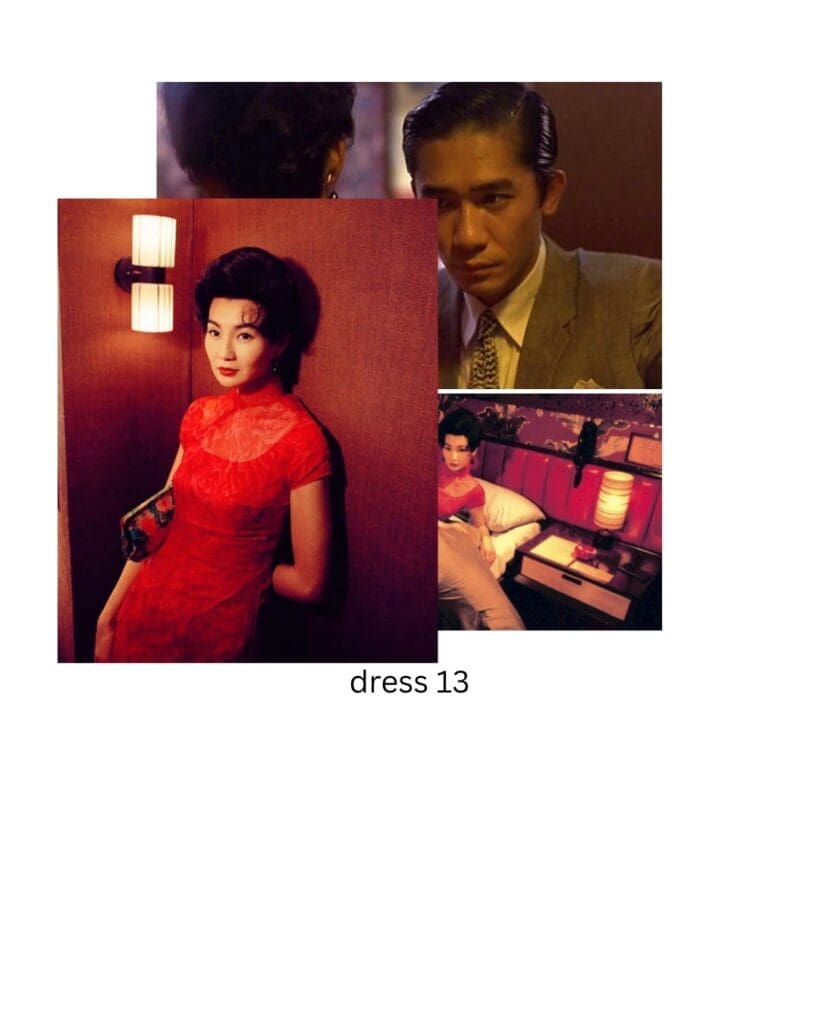
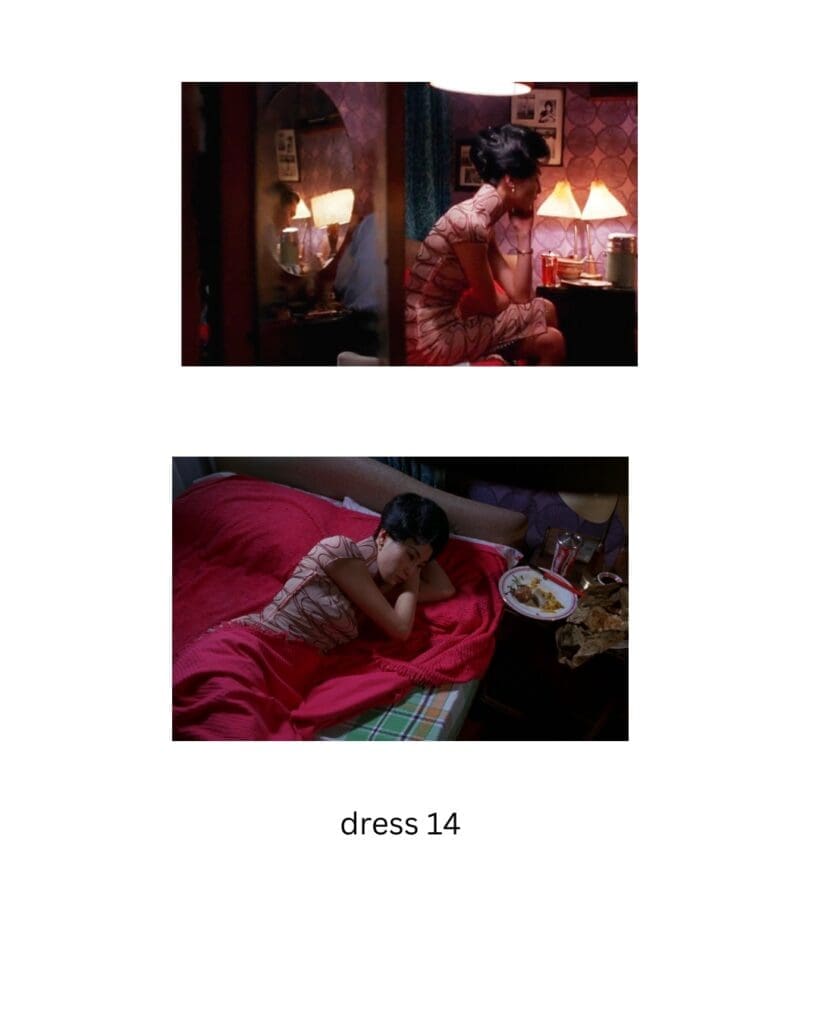
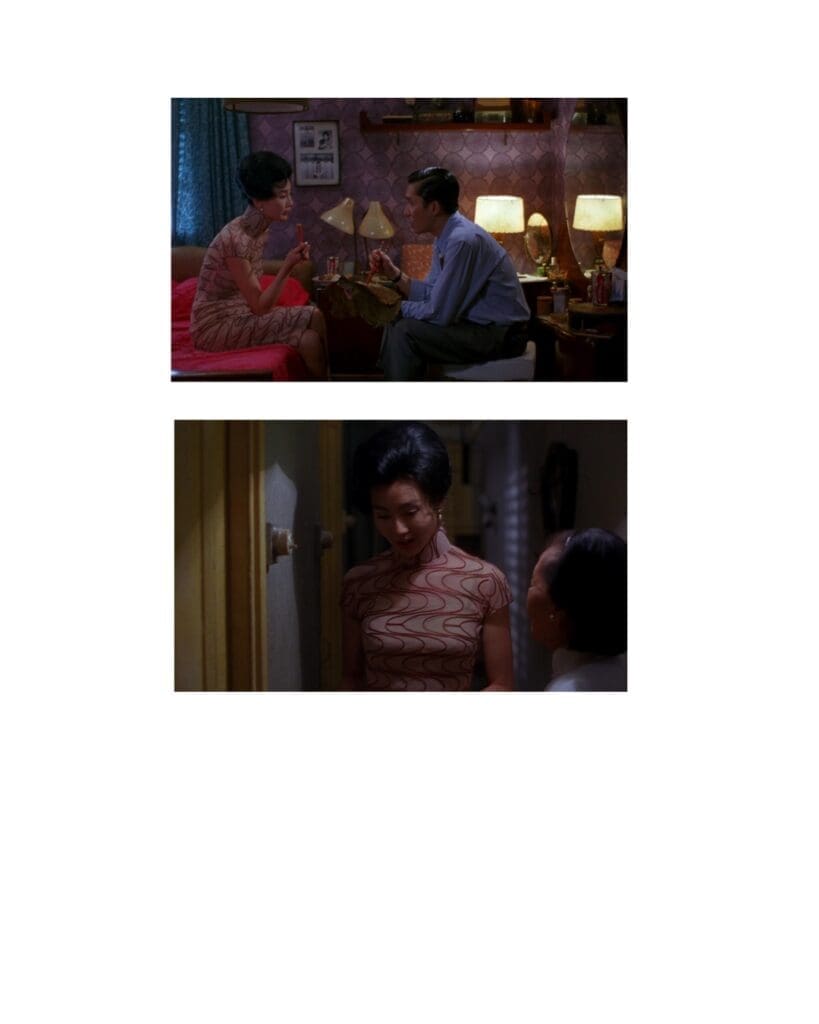
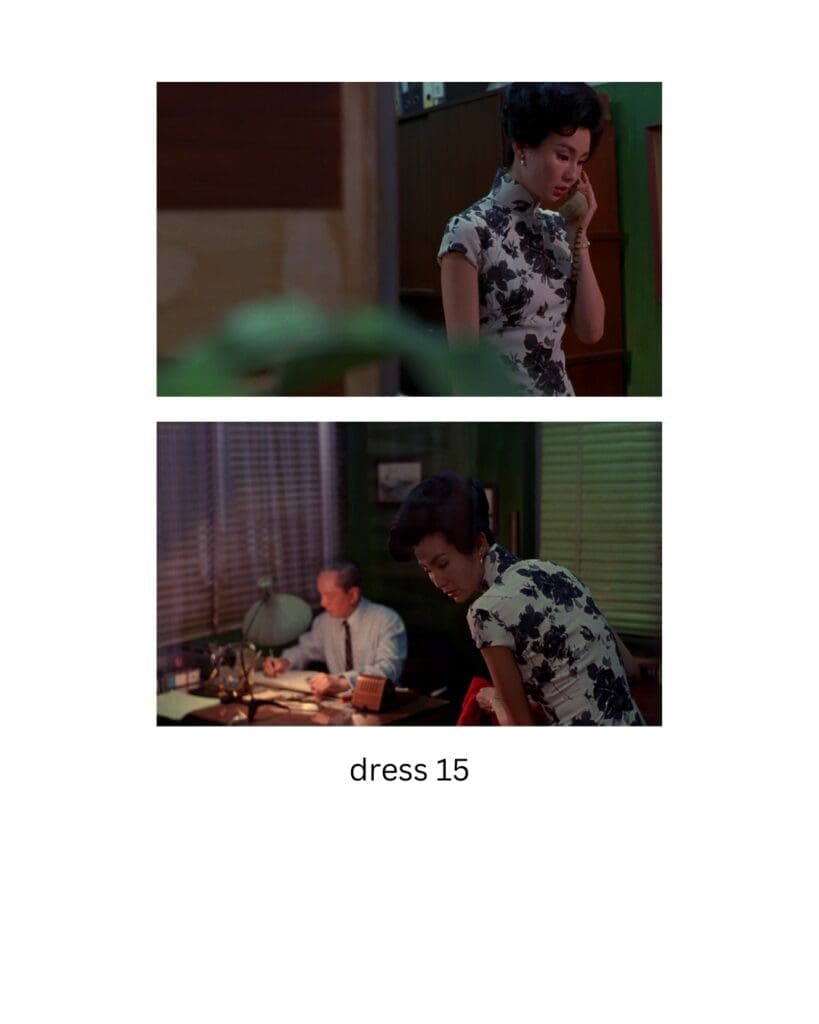
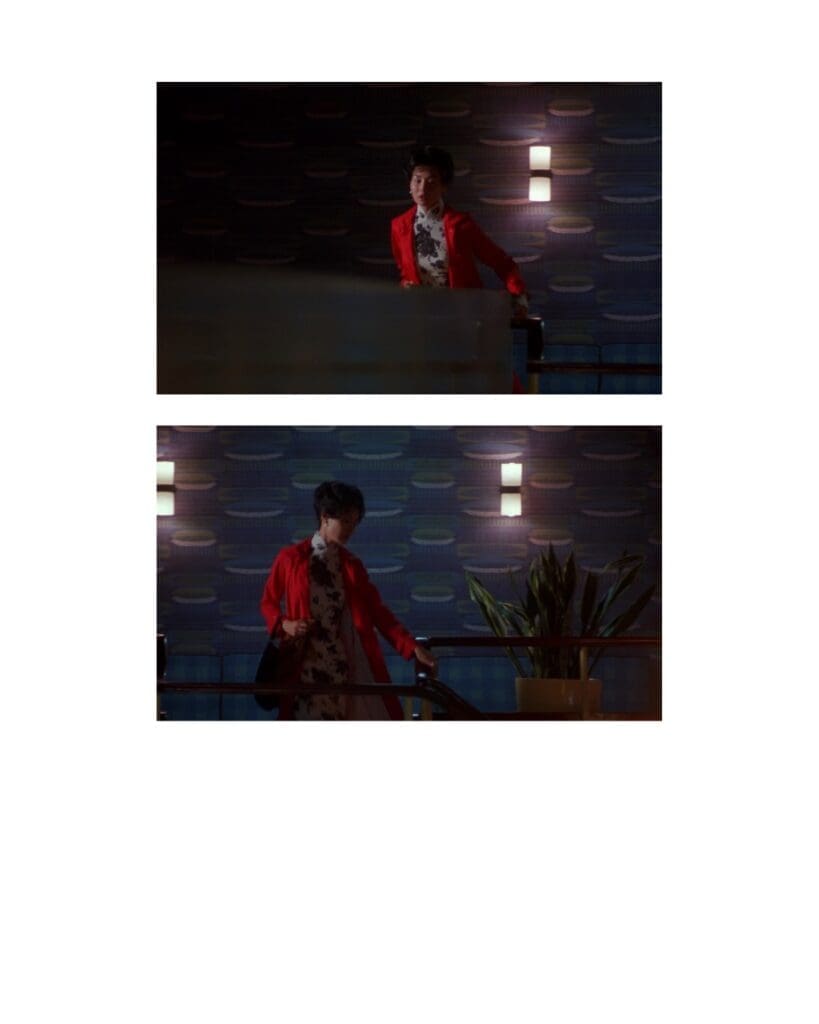
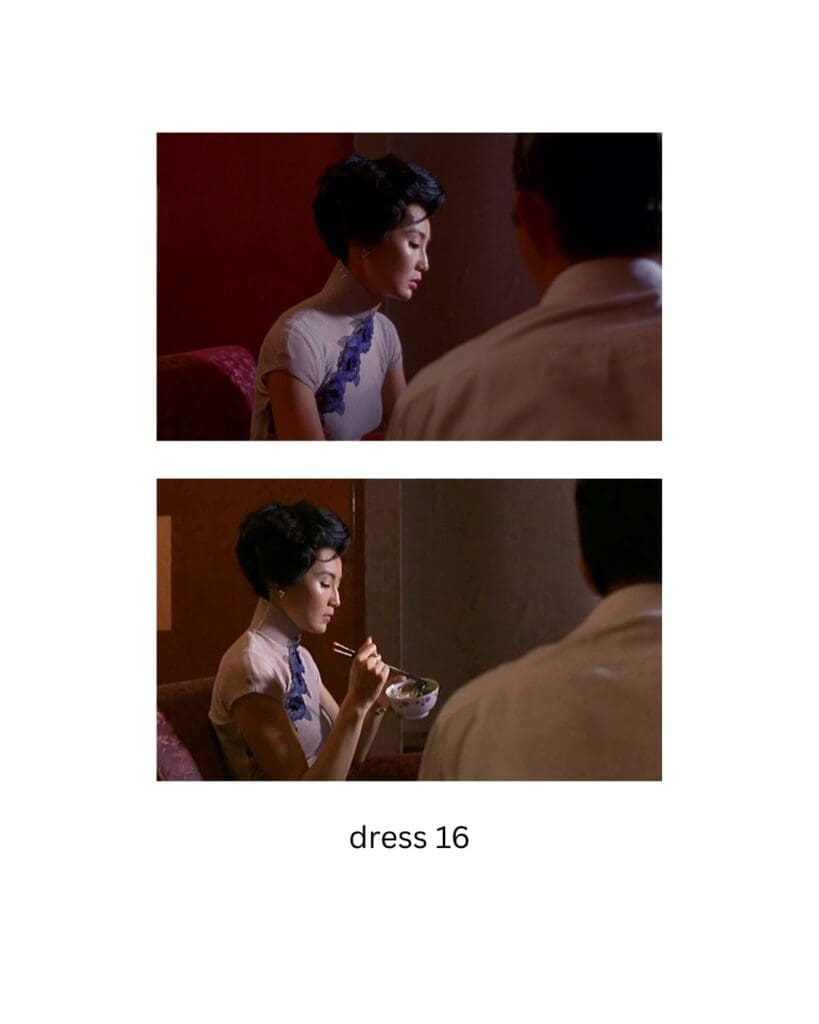
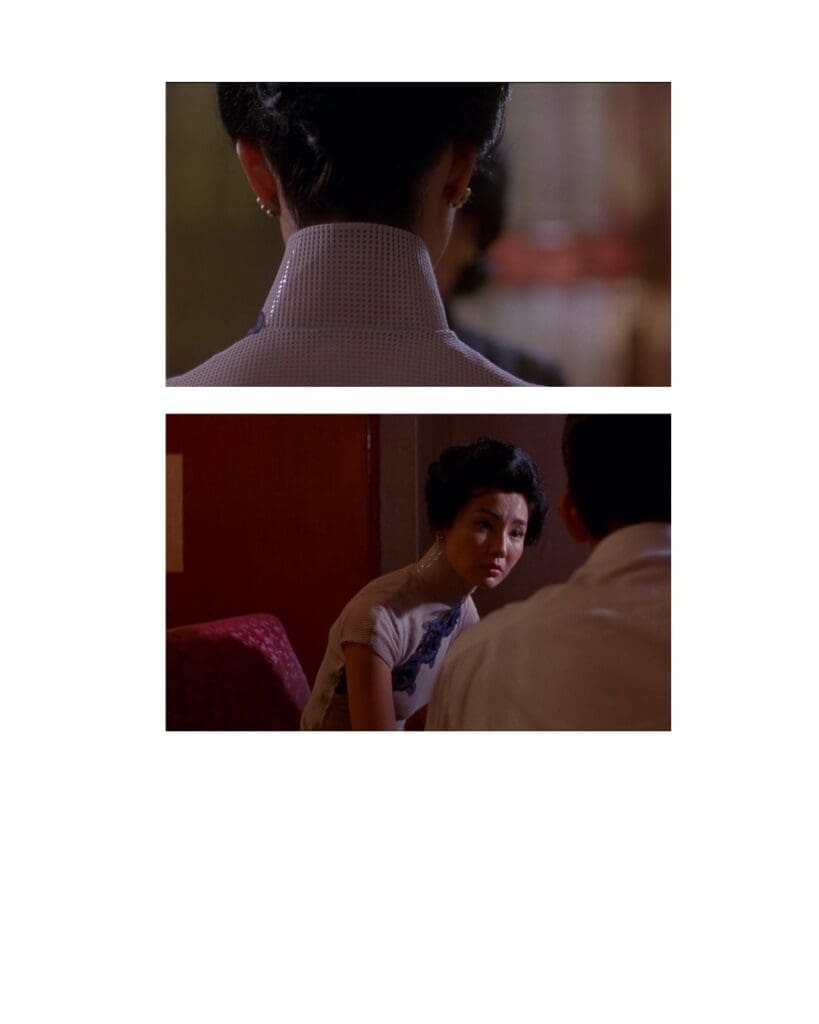
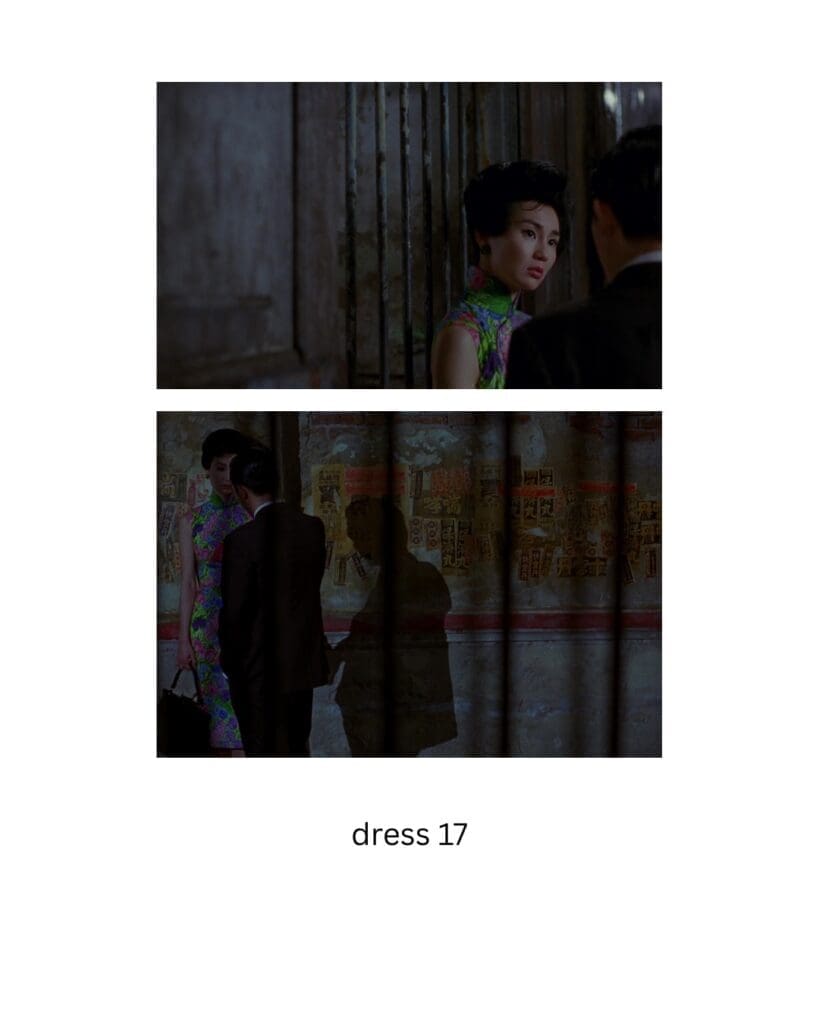
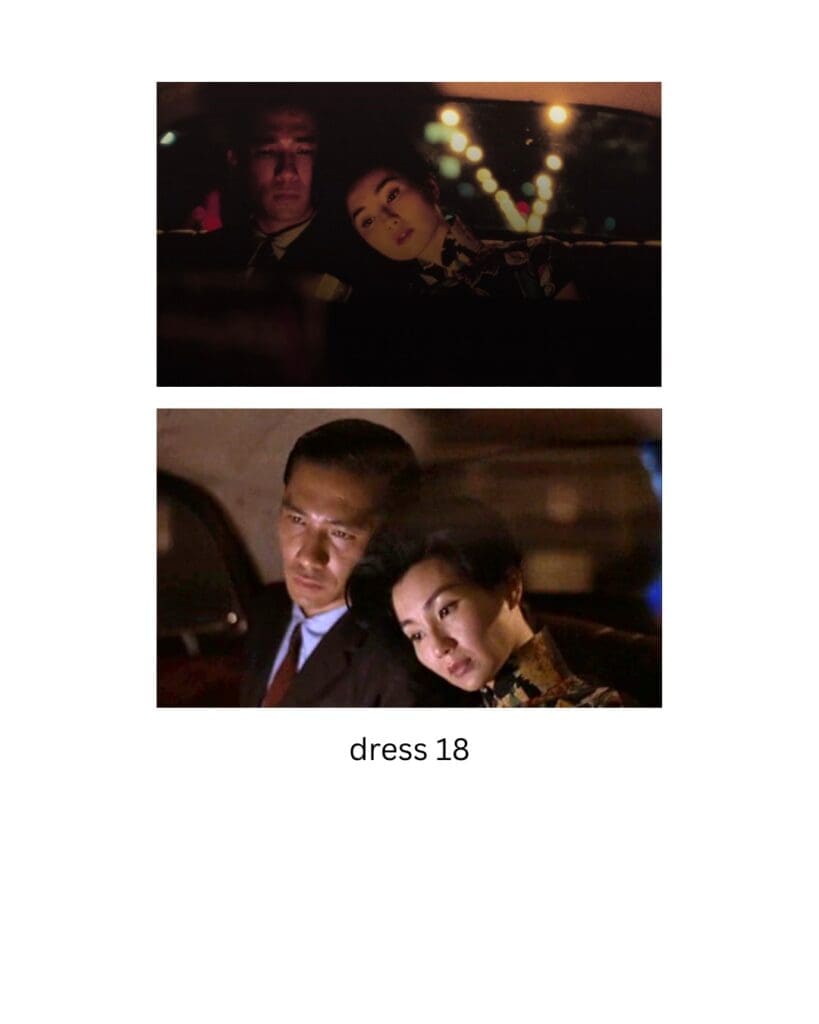
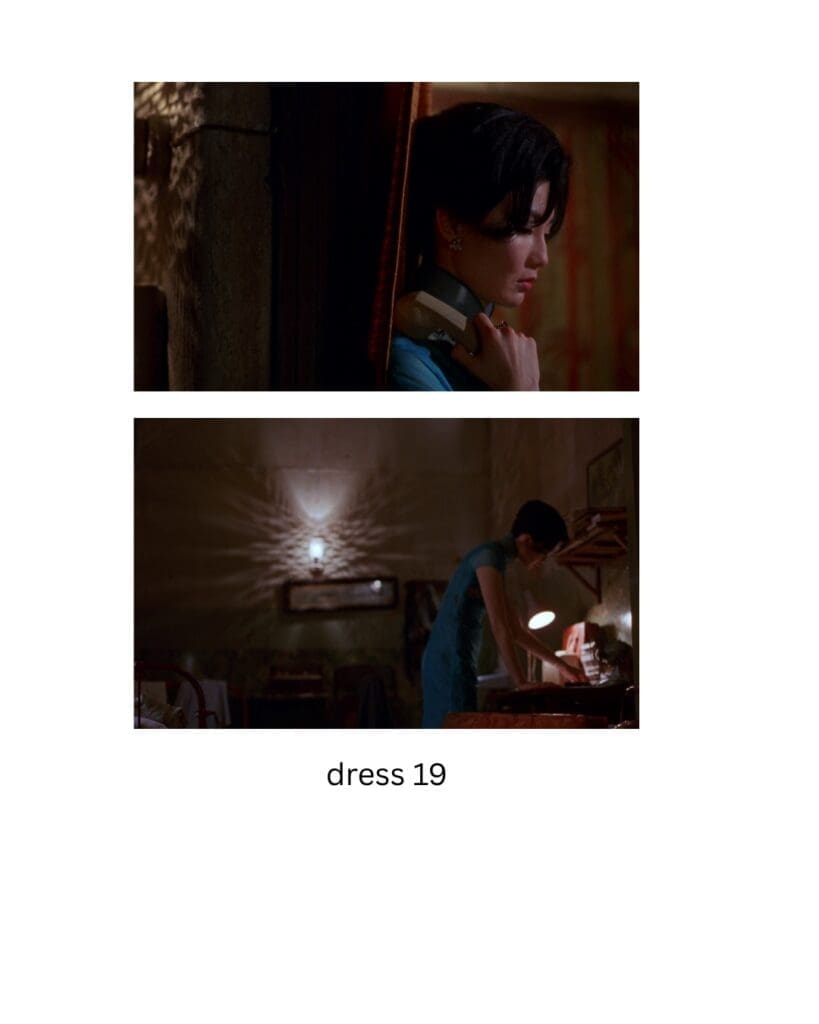
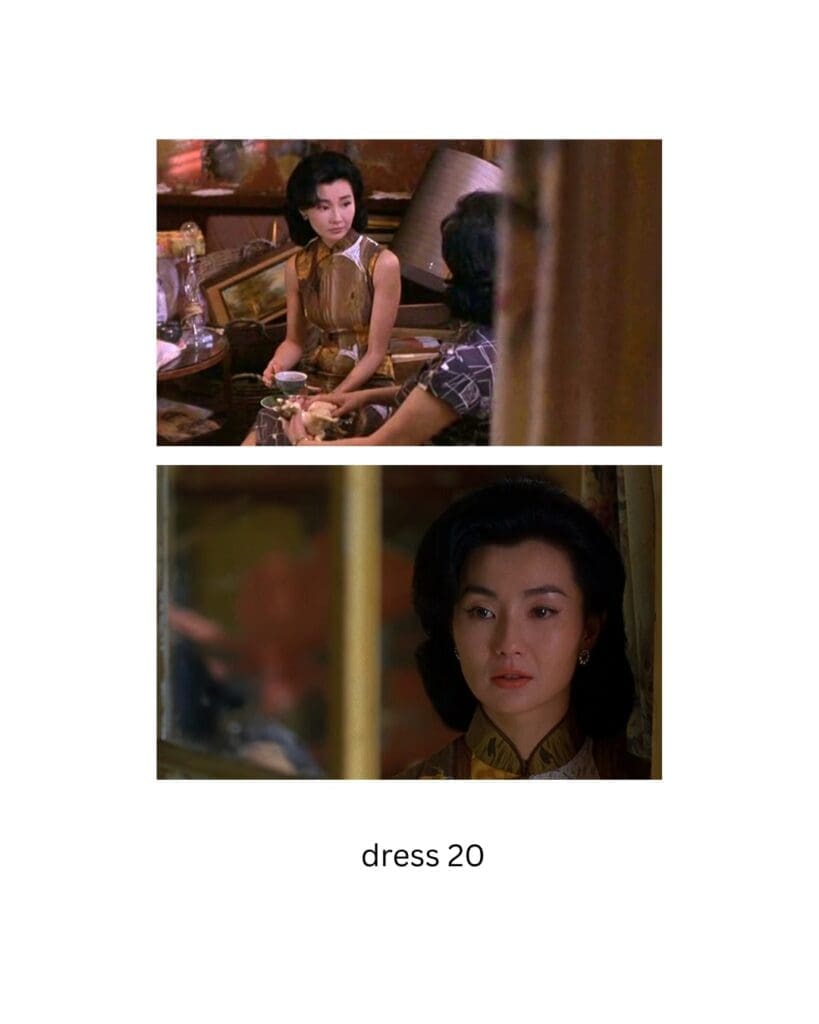
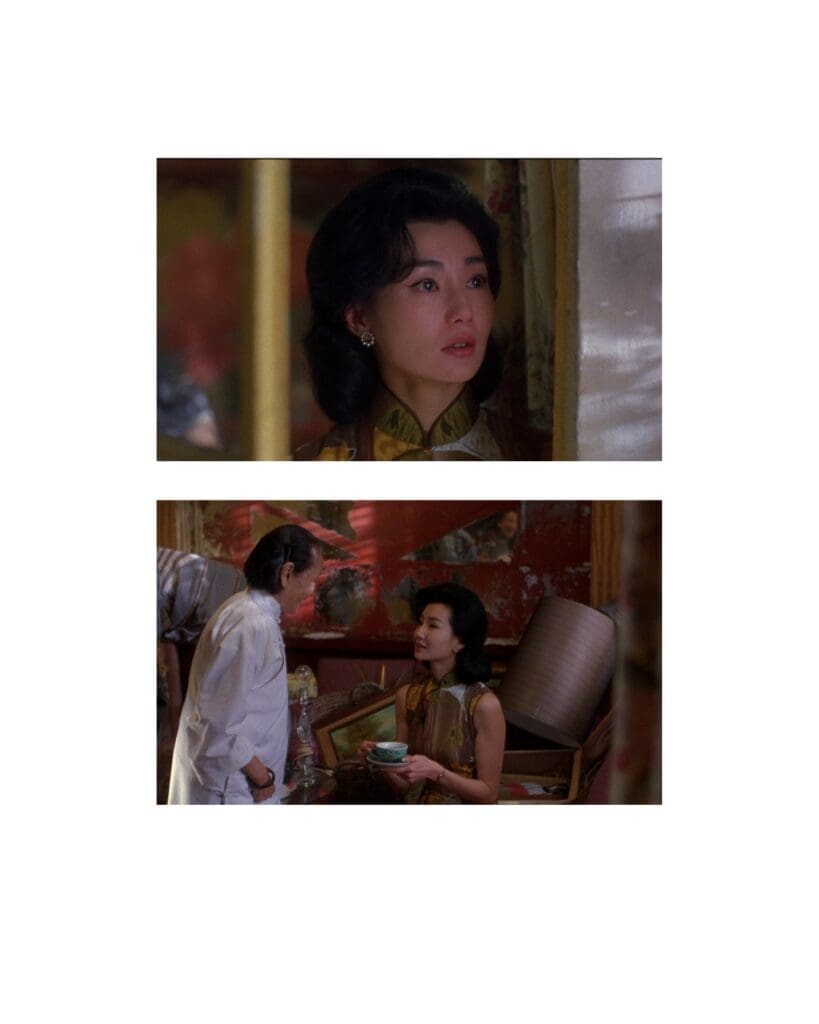
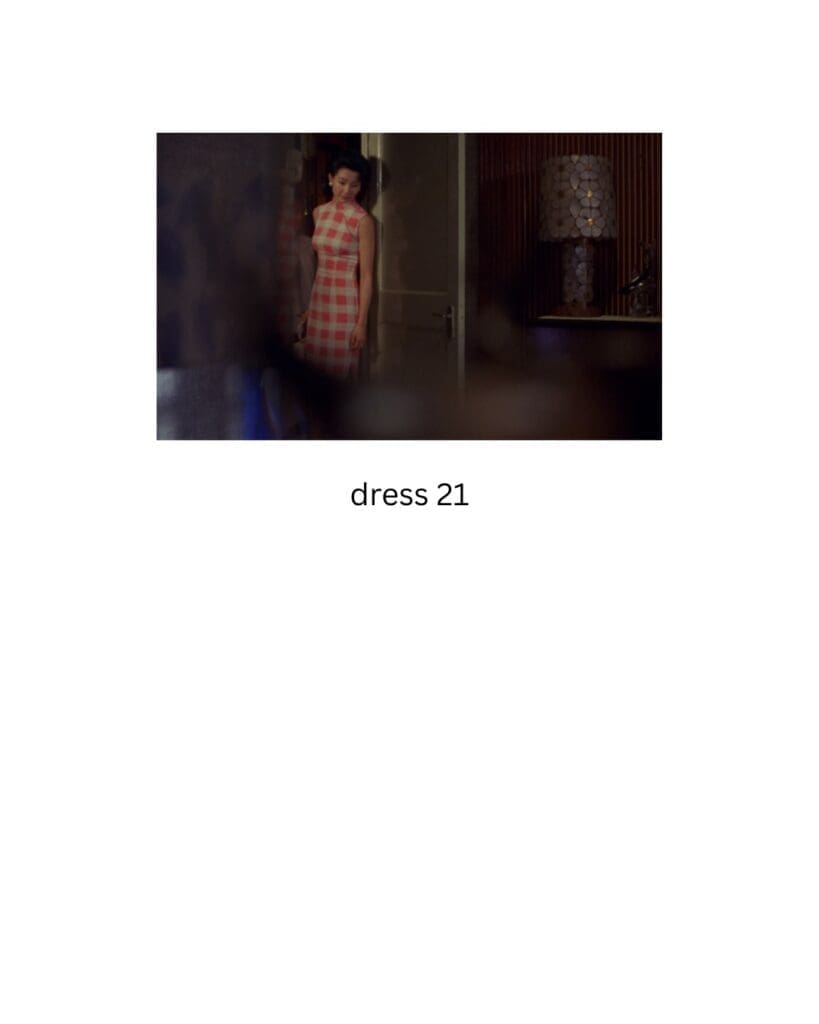
We trace the film’s enduring power through its most exquisite and devastating details: Mrs. Su Li-zhen’s twenty-one cheongsams (qipao) are a visual narration of time and emotion.
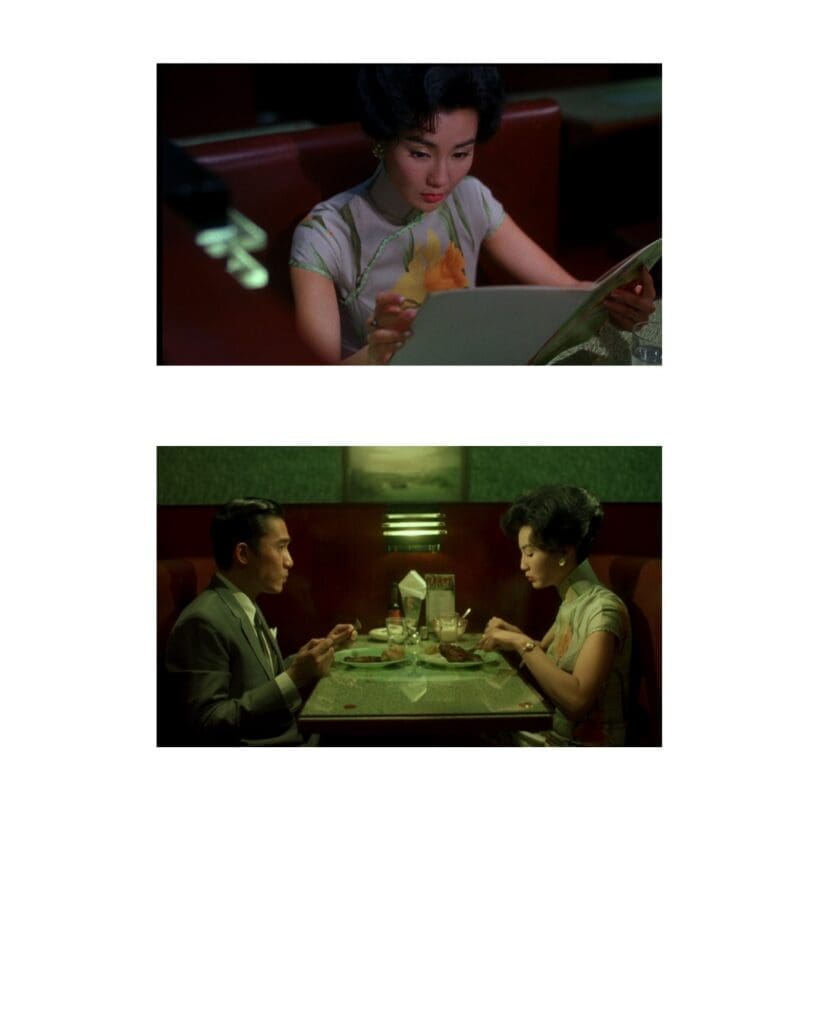
Through food rituals, wallpapered mise-en-scène and shadow-drenched frames, director Wong Kar-wai constructs an atmospheric tension where every gesture is a compromise, every glance a risk, and every unspoken word must be swallowed.
This isn’t just a story of forbidden love, but a meditation on how aesthetic precision can intensify emotional truth. This is a love story sewn at the seams, suspended in restraint, and draped in silk.
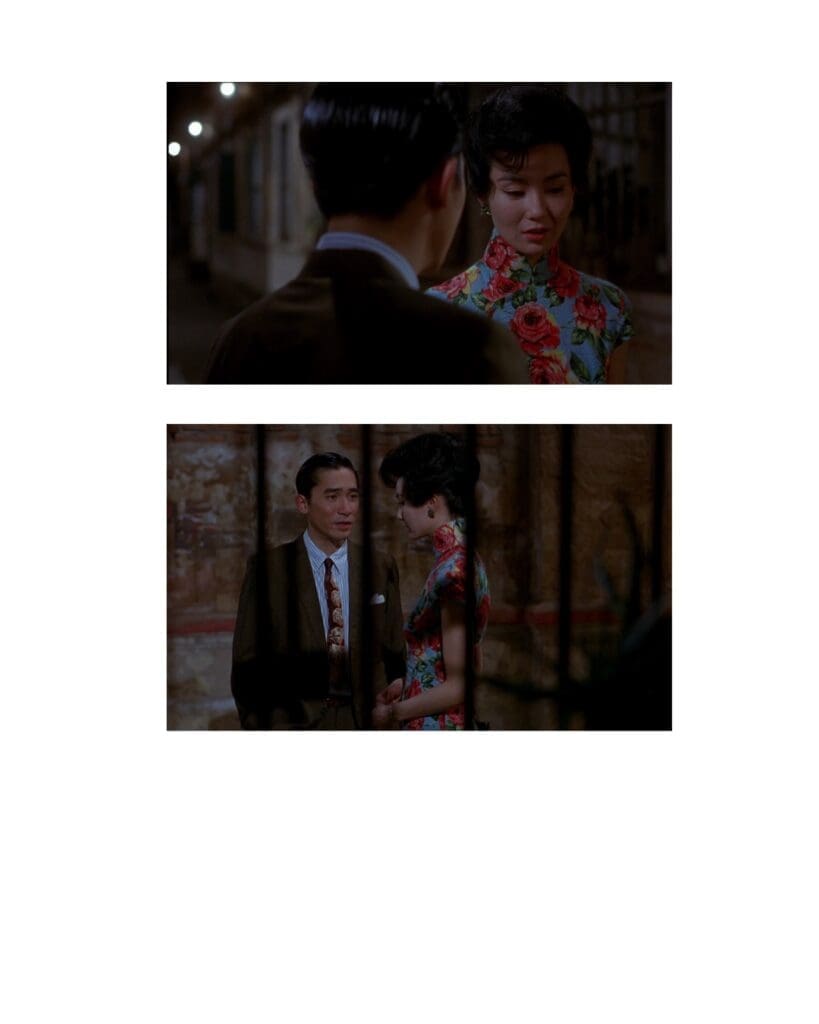
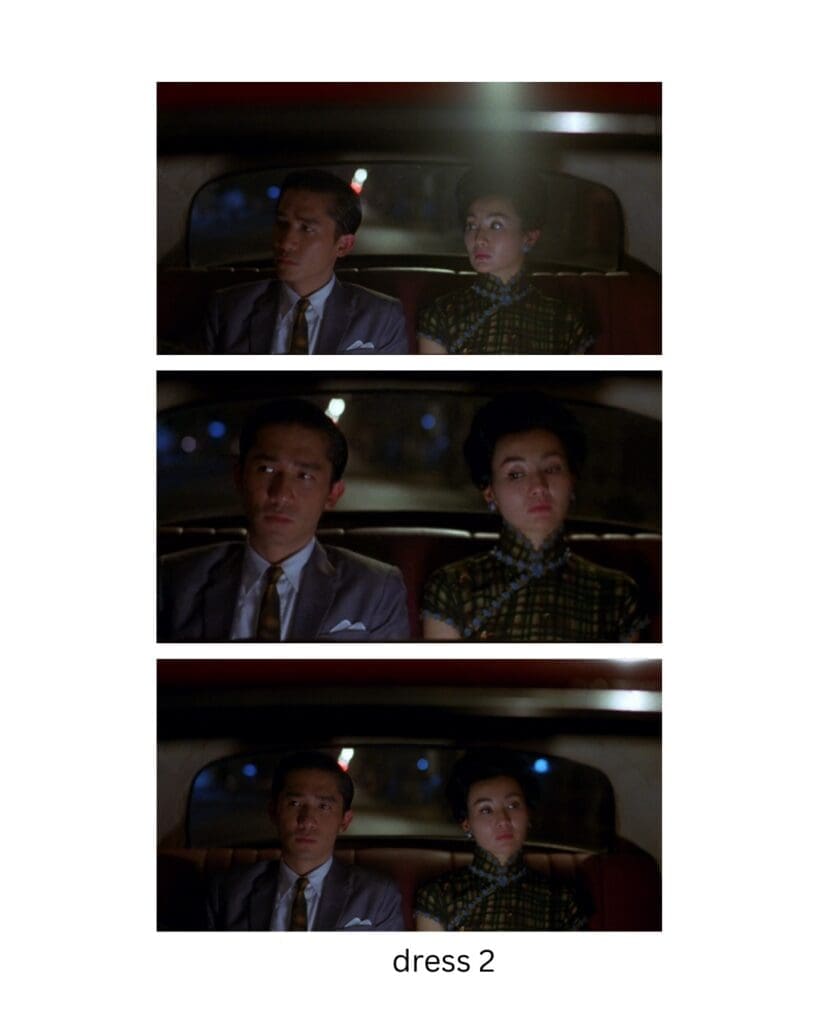
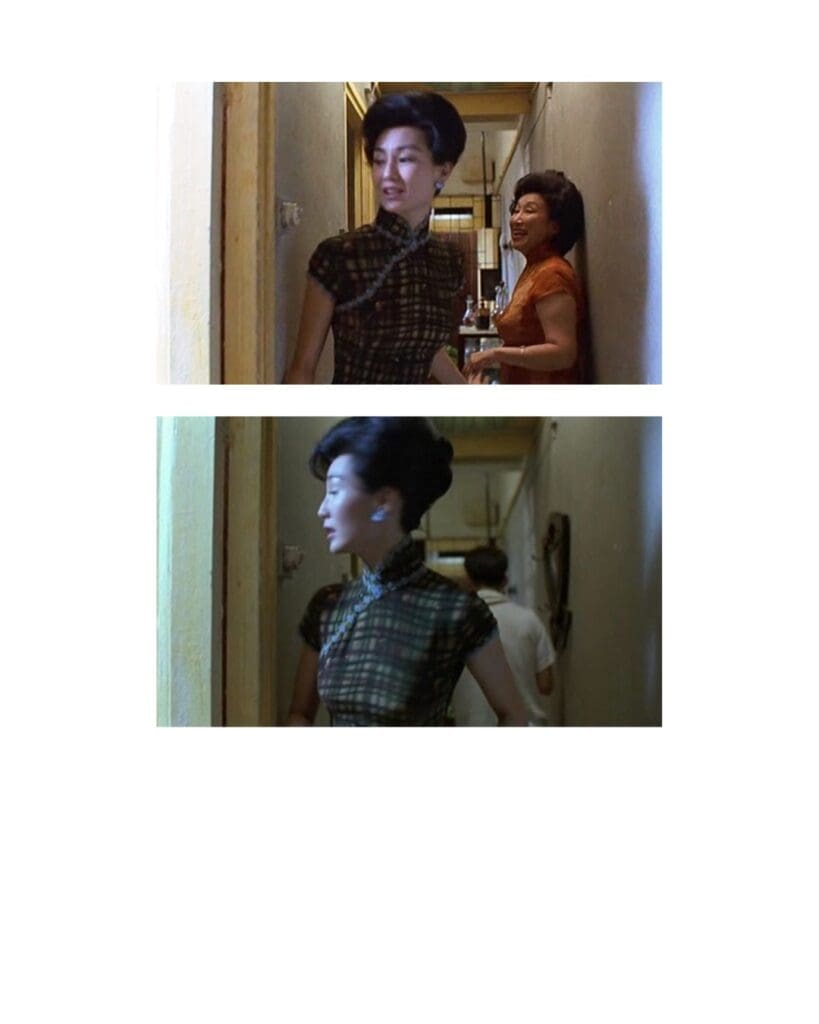
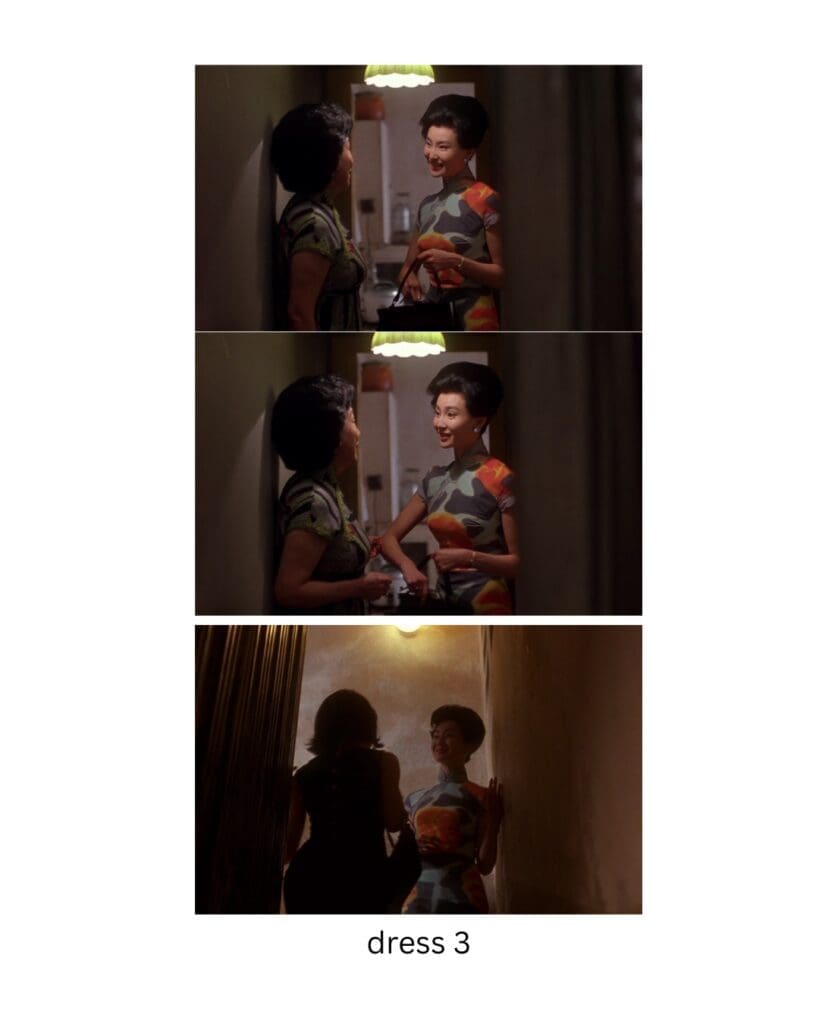
Before a word is spoken, before a glance is exchanged, there is the dress.
The Cinematic Cage
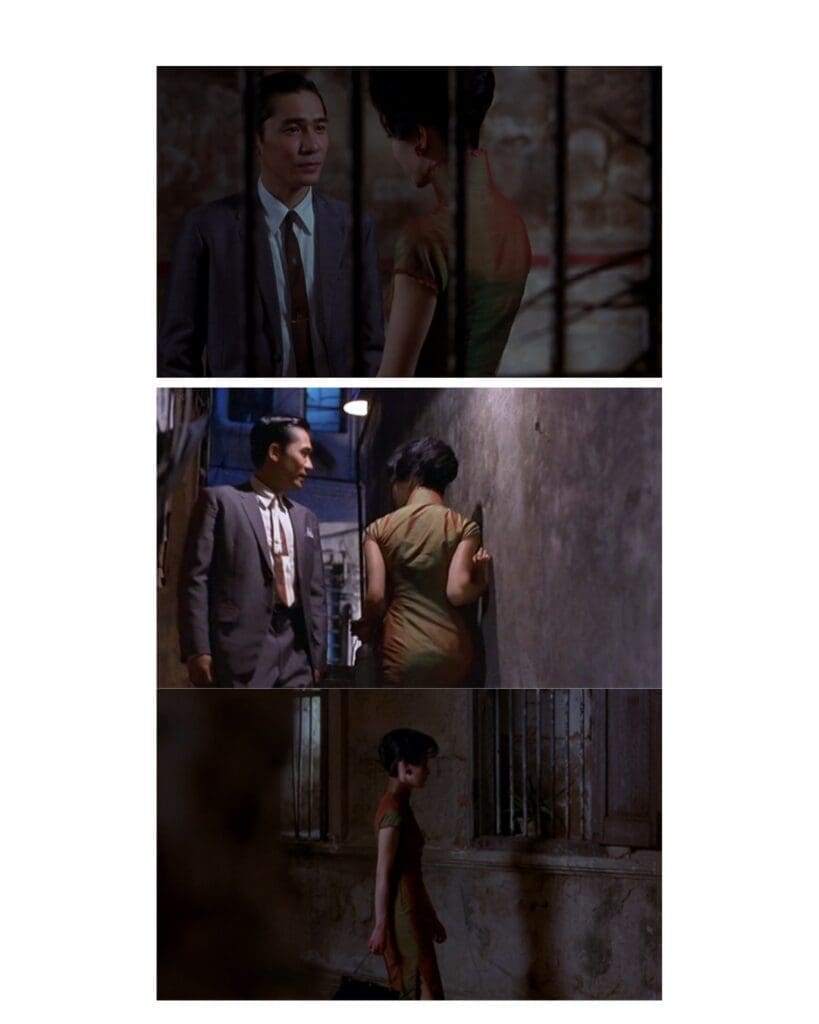
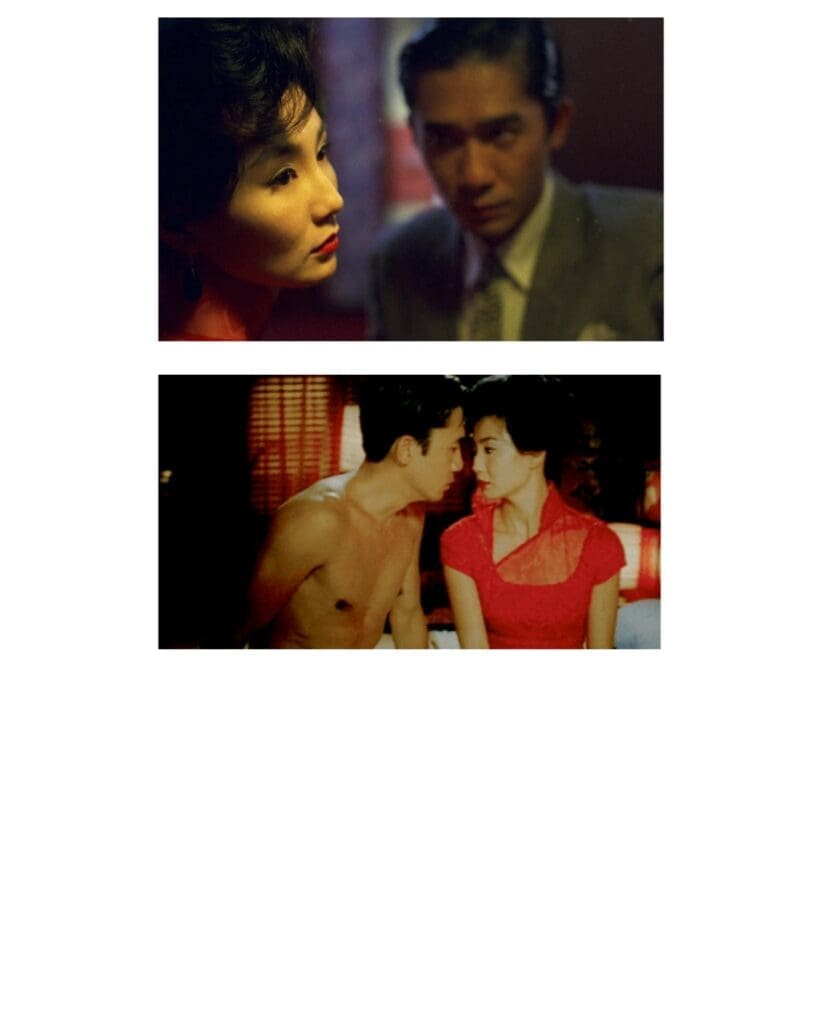
The relationship between Mrs. Su and Mr. Chow (Tony Leung) is one of the most seductive non-affairs in cinema. The tension between them is so precise it’s maddening.
It’s the cinematic equivalent of sexual edging—where climax is perpetually postponed, and the ache is the point.
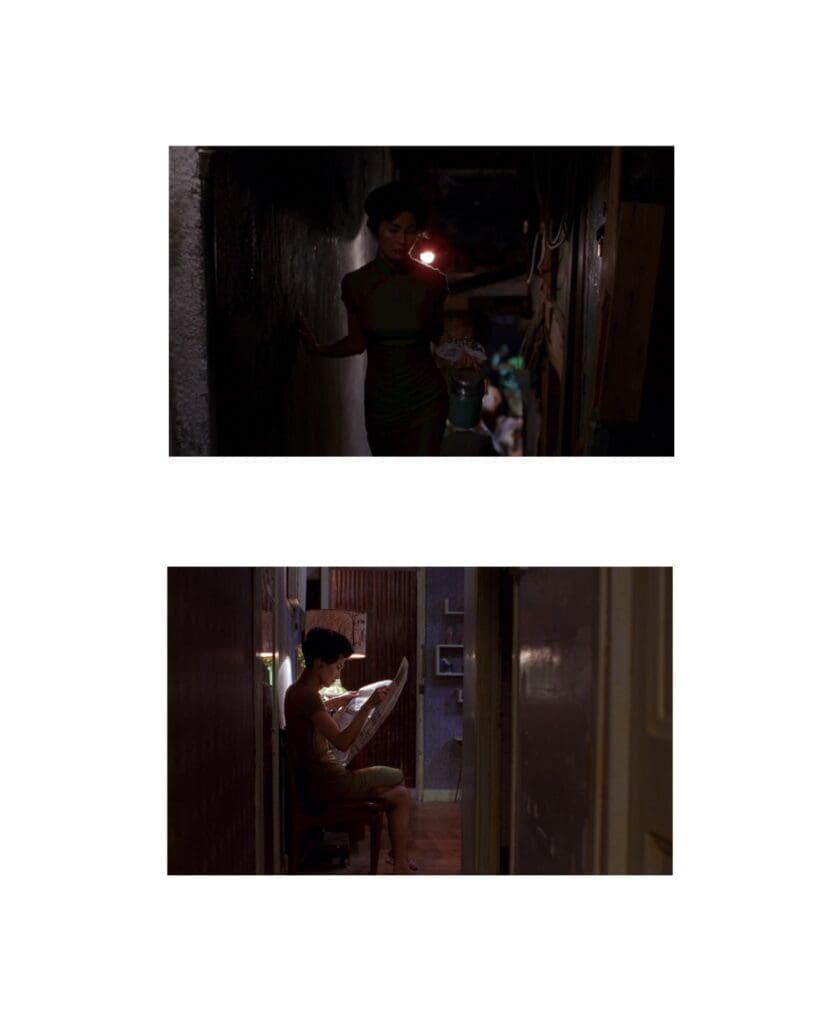
Set within the narrow, echoing tenement halls of tong lau buildings, the film captures a world where communal living collapses boundaries.
Here, privacy is a luxury and silence is survival. Mrs. Su and Mr. Chow are tenants in a ga fong apartment—boarding house where families, distant relatives, and strangers all rent rooms, sharing kitchens, bathrooms, and gossip.
The relationship between Mrs. Su and Mr. Chow (Tony Leung) is one of the most seductive non-affairs in cinema. The tension between them is so precise it’s maddening.
It’s the cinematic equivalent of sexual edging—where climax is perpetually postponed, and the ache is the point.
Set within the narrow, echoing tenement halls of tong lau buildings, the film captures a world where communal living collapses boundaries.
Here, privacy is a luxury and silence is survival. Mrs. Su and Mr. Chow are tenants in a ga fong apartment—boarding house where families, distant relatives, and strangers all rent rooms, sharing kitchens, bathrooms, and gossip.
The relationship between Mrs. Su and Mr. Chow (Tony Leung) is one of the most seductive non-affairs in cinema. The tension between them is so precise it’s maddening.
It’s the cinematic equivalent of sexual edging—where climax is perpetually postponed, and the ache is the point.
Set within the narrow, echoing tenement halls of tong lau buildings, the film captures a world where communal living collapses boundaries.
Here, privacy is a luxury and silence is survival. Mrs. Su and Mr. Chow are tenants in a ga fong apartment—boarding house where families, distant relatives, and strangers all rent rooms, sharing kitchens, bathrooms, and gossip.
The relationship between Mrs. Su and Mr. Chow (Tony Leung) is one of the most seductive non-affairs in cinema. The tension between them is so precise it’s maddening.
It’s the cinematic equivalent of sexual edging—where climax is perpetually postponed, and the ache is the point.
Set within the narrow, echoing tenement halls of tong lau buildings, the film captures a world where communal living collapses boundaries.
Here, privacy is a luxury and silence is survival. Mrs. Su and Mr. Chow are tenants in a ga fong apartment—boarding house where families, distant relatives, and strangers all rent rooms, sharing kitchens, bathrooms, and gossip.
ptures a world where communal living collapses boundaries.
Here, privacy is a luxury and silence is survival. Mrs. Su and Mr. Chow are tenants in a ga fong apartment—boarding house where families, distant relatives, and strangers all rent rooms, sharing kitchens, bathrooms, and gossip.
In this film, the boarding house becomes its own character. For Mrs. Su and Mr. Chow, any encounter must navigate the tight choreography of shared walls, overheard conversations, and the constant threat of being seen.
Their brief interactions—a shared stairwell, a borrowed book, a polite excuse—are tense, tender, and strategically casual.
The geography of this housing makes proximity inevitable and discretion imperative. Every movement is edited for modesty, every gesture edited for implication.
In this film, the boarding house becomes its own character. For Mrs. Su and Mr. Chow, any encounter must navigate the tight choreography of shared walls, overheard conversations, and the constant threat of being seen.
Their brief interactions—a shared stairwell, a borrowed book, a polite excuse—are tense, tender, and strategically casual.
The geography of this housing makes proximity inevitable and discretion imperative. Every movement is edited for modesty, every gesture edited for implication.
In this film, the boarding house becomes its own character. For Mrs. Su and Mr. Chow, any encounter must navigate the tight choreography of shared walls, overheard conversations, and the constant threat of being seen.
Their brief interactions—a shared stairwell, a borrowed book, a polite excuse—are tense, tender, and strategically casual.
The geography of this housing makes proximity inevitable and discretion imperative. Every movement is edited for modesty, every gesture edited for implication.
In this film, the boarding house becomes its own character. For Mrs. Su and Mr. Chow, any encounter must navigate the tight choreography of shared walls, overheard conversations, and the constant threat of being seen.
Their brief interactions—a shared stairwell, a borrowed book, a polite excuse—are tense, tender, and strategically casual.
The geography of this housing makes proximity inevitable and discretion imperative. Every movement is edited for modesty, every gesture edited for implication.
In this film, the boarding house becomes its own character. For Mrs. Su and Mr. Chow, any encounter must navigate the tight choreography of shared walls, overheard conversations, and the constant threat of being seen.
Their brief interactions—a shared stairwell, a borrowed book, a polite excuse—are tense, tender, and strategically casual.
The geography of this housing makes proximity inevitable and discretion imperative. Every movement is edited for modesty, every gesture edited for implication.
In this film, the boarding house becomes its own character. For Mrs. Su and Mr. Chow, any encounter must navigate the tight choreography of shared walls, overheard conversations, and the constant threat of being seen.
Their brief interactions—a shared stairwell, a borrowed book, a polite excuse—are tense, tender, and strategically casual.
The geography of this housing makes proximity inevitable and discretion imperative. Every movement is edited for modesty, every gesture edited for implication.
In this film, the boarding house becomes its own character. For Mrs. Su and Mr. Chow, any encounter must navigate the tight choreography of shared walls, overheard conversations, and the constant threat of being seen.
Their brief interactions—a shared stairwell, a borrowed book, a polite excuse—are tense, tender, and strategically casual.
The geography of this housing makes proximity inevitable and discretion imperative. Every movement is edited for modesty, every gesture edited for implication.
In this film, the boarding house becomes its own character. For Mrs. Su and Mr. Chow, any encounter must navigate the tight choreography of shared walls, overheard conversations, and the constant threat of being seen.
Their brief interactions—a shared stairwell, a borrowed book, a polite excuse—are tense, tender, and strategically casual.
The geography of this housing makes proximity inevitable and discretion imperative. Every movement is edited for modesty, every gesture edited for implication.
In this film, the boarding house becomes its own character. For Mrs. Su and Mr. Chow, any encounter must navigate the tight choreography of shared walls, overheard conversations, and the constant threat of being seen.
Their brief interactions—a shared stairwell, a borrowed book, a polite excuse—are tense, tender, and strategically casual.
The geography of this housing makes proximity inevitable and discretion imperative. Every movement is edited for modesty, every gesture edited for implication.
In this film, the boarding house becomes its own character. For Mrs. Su and Mr. Chow, any encounter must navigate the tight choreography of shared walls, overheard conversations, and the constant threat of being seen.
Their brief interactions—a shared stairwell, a borrowed book, a polite excuse—are tense, tender, and strategically casual.
The geography of this housing makes proximity inevitable and discretion imperative. Every movement is edited for modesty, every gesture edited for implication.
Lonely in a Crowd: Isolation as Atmosphere
Despite being surrounded by people, Mrs. Su and Mr. Chow are profoundly alone. They move through spaces filled with chatter and clatter, yet carry a silence that is intensely private. Their solitude isn’t geographical—it’s emotional.
This constant proximity to others amplifies their loneliness, and it’s a reminder that isolation isn’t about being alone. It’s about having no one who can fully know what you feel. It’s walking the same hallway every night, nodding politely, and swallowing everything you’ll never say.
Duplicity, Duality, and the Mirror
Both Mrs. Su and Mr. Chow are married; not unhappily. This ambiguity makes their connection all the more dangerous. They don’t fall in love because of their unhappiness. They fall in love in spite of the lives they’ve built.
They start off role-playing their spouses’ affair to understand it. But they end up using those roles to fall for each other. It’s a double performance: one for the world and one for each other—one they’re not even honest about with themselves.
The Seduction of Restraint
The duality is everywhere: tradition versus desire, honor versus impulse, form versus feeling.
What makes In the Mood for Love devastating is not the affair—it’s the lack of one. The characters choose restraint. They edge closer and closer to pleasure, to betrayal, to intimacy. But they never let go.
And the viewer feels the tension like a pulled thread, waiting to snap.
It’s the love that never happens.
It’s everything that could’ve bloomed, but didn’t.
The film aches with moments suspended in amber: glances aborted, hands retracted, doors not knocked on.
This love connection is strangled by timing, propriety, fear. And because they do the “right” thing, they’re left with nothing but memory.
Seduction by subtraction. It’s a masterclass in the eroticism of denial, the luxury of longing.